The $50 Mn mistake Roche spent $7.2 Bn trying to undo
Roche discovered Foundayo, sold it for $50M to Lilly, then spent $7.2Bn trying to buy its way back into obesity. Take a look inside the $32Bn Roche dealmaking and where this leads to.
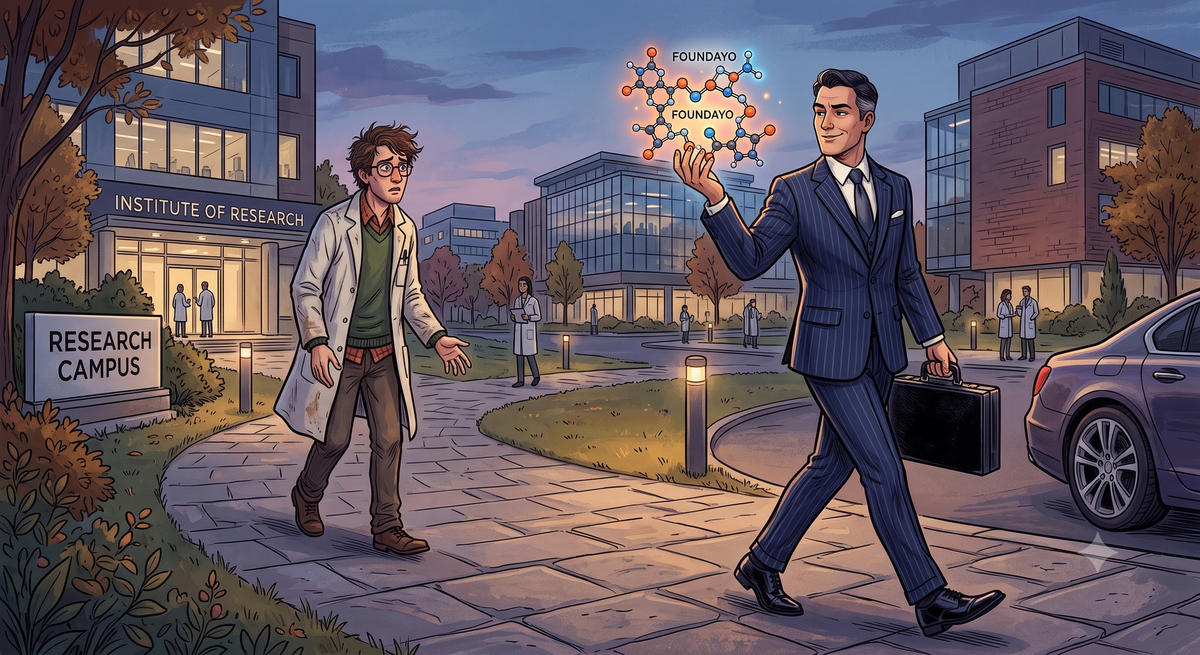
In 2018 a Roche subsidiary licensed a small molecule called OWL833 to Eli Lilly for $50 million upfront. In April 2026 that molecule was approved as Foundayo, the first oral GLP-1 pill for weight loss. Over the same eleven years Roche committed roughly $7.2 Bn of disclosed capital buying its way back into obesity and metabolic disease, and as of July 2026 it has no approved product there. That single contrast frames everything below. I traced $32.2 Bn of Roche's external innovation from January 2016 to July 2026, and the pattern that emerges is a company with excellent science, expensive taste and a persistent problem converting purchased biology into revenue.
Chapter 1: The Pharma + diagnostics story
Roche's FY2025 group sales were $74.3 Bn, with oncology and haematology at 39% and Diagnostics at 23%. Gross margin has been remarkably flat near 73% across 2023 to 2025, while EBITDA margin widened from 35.2% to 36.8%. Net profit dipped to $10.4 Bn in 2024 purely because of about $5.2 Bn of non cash impairments on two earlier acquisitions, then rebounded to $16.7 Bn in 2025. RoRC improved from 3.1x to 3.7x, but the improvement comes almost entirely from a flat research denominator rather than accelerating output.
From a Basel chemical shop to a federated research group
Roche was founded in October 1896 in Basel by Fritz Hoffmann La Roche and the company that exists today is the product of four structural decisions rather than steady organic growth. The first was the 1990 purchase of a majority stake in Genentech, the South San Francisco company that effectively invented the biotechnology industry, completed to full ownership in 2009 for $46.8 Bn. That single move gave Roche a second, semi-independent research engine sitting inside the american innovation ecosystem.
The second was diagnostics. The 1998 acquisition of Corange, parent of Boehringer Mannheim, for roughly $11 Bn created what is now Roche Diagnostics and made the company the only major pharmaceutical group with a genuinely comparable scale business in testing. In the third, Roche took majority control of Chugai in 2002, keeping it listed and operationally independent. Chugai produced Hemlibra and Actemra and as this article will show, also produced the molecule that became a competitor's obesity blockbuster. The fourth was subtraction. Roche sold its vitamins business to DSM in 2003, and in 2021 bought back the roughly 33% voting stake that Novartis had held since 2001 for about CHF 19 Bn, removing a rival from its own share register. The result is a group organised as three separate research organisations, pRED in Basel, gRED at Genentech and Chugai in Japan, alongside Roche Diagnostics, with the Hoffmann and Oeri families still holding majority voting control.
What Roche looks like at full year 2025
FY2025 revenue by therapy area
hover above donut slice or legend to see $ Bn values in middle
The brands carrying the group
FY2025 leading brands by therapy area
The table makes a point that matters for everything that follows. The three largest medicines in the group, Ocrevus, Hemlibra and Vabysmo, came from Genentech, Chugai and Genentech respectively. Not one of them was discovered in Basel. Meanwhile the classic Basel and Genentech oncology antibodies, Avastin, Herceptin and MabThera, have fallen to a combined $3.9 Bn and continue to erode under biosimilar pressure.
Roche's portfolio on a growth share matrix
Three years of financial health
Roche group financials 2023 to 2025
The story across these three years is a steady operating machine wearing a noisy accounting coat. Revenue climbed every year, from $65.4 Bn to $74.3 Bn, and gross margin held between 72.1% and 73.1% throughout, which is the signature of good pricing power and a value product mix. The number that draws the eye is net profit, which fell from $13.8 Bn in 2023 to $10.4 Bn in 2024 before rebounding to $16.7 Bn in 2025. I want to be precise about why. According to the Finance Report 2025, Roche took a goodwill impairment of about CHF 3.2 billion plus roughly CHF 1.4 billion of intangible writedowns in 2024, together about $5.2 Bn, almost entirely attributable to two of its own earlier acquisitions, Flatiron Health and Spark Therapeutics. Those are non cash charges. Strip them out and the earnings engine never stumbled, which is exactly why EBITDA rose in every single year, from $23.0 Bn to $27.4 Bn, with the margin widening from 35.2% to 36.8%. In my opinion that 2024 dip is the single most informative line in Roche's recent accounts, because it is the company stating in the language of auditors that two of its open innovation bets did not deliver what was underwritten.
What is actually driving the research return
Return on Research Capital
Here is the mechanical explanation and it is not the flattering one. Roche's return on research capital rose from 3.1x in 2023 to 3.7x in 2025. But core R&D investment was effectively flat in dollars across the entire period, at $14.7 Bn, $14.8 Bn and $14.8 Bn, while gross profit rose by $7 Bn. The ratio improved because the denominator stopped growing, not because research output accelerated.
It matters which vintage of spending is funding today's profit. The 2025 multiple of 3.7x is measured against 2024 R&D of $14.8 Bn. But the medicines actually generating 2025 gross profit, Ocrevus, Hemlibra, Vabysmo, Perjeta, were discovered and developed across the 2000s and early 2010s, when Roche's annual research budget was materially smaller than it is now. So yes, the current multiple is flattered by output from research vintages that were smaller than today's spend. That is arithmetically favourable and strategically uncomfortable, because it tells you nothing about whether today's $14.8 Bn will produce a comparable return. I should also flag a translation effect. Computed in Roche's own reporting currency, stripping out the franc's appreciation, the same ratio reads 2.9x, 3.3x and 3.4x. The dollar denominated improvement of 0.6x is therefore about 0.5x in constant currency terms. Author's calculation; not an official company reconciliation.
For external context, Deloitte's annual study of return from pharmaceutical innovation reported projected internal rates of return for the largest biopharma companies recovering from 1.2% in 2022 to 4.1% in 2023 and 5.9% in 2024. Deloitte's own commentary consistently notes that these industry returns are concentrated in a narrow band of assets, with a small number of large forecast products carrying the cohort average. That concentration point applies to Roche as much as anyone: a group whose top three medicines alone generate $19.2 Bn is not running a diversified research return, it is running a handful of large bets.
Chapter 2: Open innovation past and present
Roche runs four external innovation modalities at once, but the outbound door is barely used and the one time it was used at scale it gave away the decade's best obesity asset. Between January 2016 and July 2026, I count 30 material external transactions, with disclosed committed capital of about $32.2 Bn and the cadence roughly triples from 2023 onward. The Roche Venture Fund has been running since 2002 on an evergreen allocation of CHF 500 million, has never been spun out and manages every equity investment Roche makes in biotech and diagnostics. Artificial intelligence moved from nothing in 2016 to the single most concrete capability purchase of the period: more than 3,500 Blackwell GPUs, the largest announced footprint at any pharmaceutical company.
Everything in Chapter 1 describes a company that earns well. This chapter is about how it restocks. I have separated Roche's external activity into its four operating modes, laid out every material transaction chronologically, traced where the science actually originates, examined the venture arm in detail,and finished with the partners that would not have appeared on a pharmaceutical deal sheet a decade ago.
The four modes, and the one Roche barely uses
Inbound acquisition and licensing is where Roche spends the money. This accounts for the overwhelming majority of the $32.2 Bn traced here. The archetype is the October 2023 acquisition of Telavant from Roivant and Pfizer for $7.1 Bn upfront plus a $150 million near term milestone, which brought the anti-TL1A antibody now called afimkibart into Roche's inflammatory bowel disease pipeline. The December 2023 purchase of Carmot Therapeutics for $2.7 Bn upfront plus up to $400 million in milestones, is the same shape.
Outbound licensing and divestiture is the door Roche almost never opens, which makes the exceptions worth studying carefully. In 2018 Chugai licensed a small molecule GLP-1 receptor agonist then called OWL833 to Eli Lilly for $50 million upfront plus up to $390 million in milestones. That molecule became orforglipron, approved by the FDA as Foundayo in April 2026, the first oral GLP-1 pill for chronic weight management. Analyst forecasts for peak sales range from about $18 Bn on a Bloomberg consensus basis to more than $40 Bn at the high end. Roche's half year 2026 report discloses milestone income at Chugai related to Foundayo, so the licence is still paying, but it is paying a royalty rather than a franchise. Elsewhere on the outbound side, Roche divested InterMune, including United States rights to Esbriet, during the first half of 2025 and sold the clinical research arm of Flatiron Health in 2025, seven years after acquiring the company.
Coupled co development is the middle path, where Roche shares both cost and upside instead of absorbing the asset whole. The March 2025 agreement with Zealand Pharma on the amylin analogue petrelintide is the cleanest case: $1.7 Bn upfront against a headline of up to $5.3 Bn, with joint development and commercialisation. The December 2019 Sarepta agreement works the same way: $1.2 Bn upfront, comprising $750 million cash and a $400 million equity investment, up to $1.7 Bn in milestones, an equal split of global development expenses,and rights limited to territories outside the United States. The July 2023 Alnylam collaboration on zilebesiran, at $310 million upfront against up to $2.8 Bn, and the June 2026 Nurix agreement on the BTK degrader bexobrutideg, at $700 million upfront, follow the same logic.
Platform and ecosystem is capability rather than molecule. The NVIDIA relationship, which began as a Genentech research collaboration in 2023 and became a full AI factory in March 2026, is the defining example and is quantified later in this chapter. The distribution is the point. Roche converts cash into pipeline far more readily than it converts pipeline into cash. Over eleven years I can identify one significant outbound licence of a therapeutic asset, and it produced a competitor's blockbuster.
Every material transaction from January 2016 to July 2026
Roche open innovation milestones 2016 to 2026
Two patterns come straight off the table. The first is acceleration and concentration. From 2016 to 2022 Roche averaged one to two material deals a year, and several were diagnostics or data rather than therapeutics. From 2023 the pace roughly triples and the cheques grow. In 2023 alone Roche committed about $10 Bn, which is 31% of the entire eleven year total and two transactions, Telavant and Carmot, accounted for 97% of that year's spend (Author's calculation; not an official company reconciliation). The second is thematic narrowing. The post 2023 deals cluster into a small number of themes: obesity and metabolic disease through Carmot, Zealand, 89bio and the Structure patent licence; inflammatory bowel disease through Telavant; cell therapy and degraders through Poseida and Nurix and computational infrastructure through NVIDIA, PathAI and SAGA. Roche is not shopping broadly. It is buying one specific future, and it is buying almost all of it from outside Basel.
A deal table tells you what Roche bought. It does not tell you where the biology started. Tracing the sourcing produces a clear three tier model. The dominant source of inbound therapeutic assets come from small and mid capitalisation United States biotech. Roche is well positioned to shop in this market because gRED physically sits inside it and in my view Genentech's South San Francisco campus functions as much as an intelligence network as a research site. The second tier is academic and hospital science, concentrated in Europe and feeding the early pipeline rather than the deal table. Through the Institut Roche initiative in France, Roche runs collaborations with the Institut Pasteur on hepatitis B antibodies and with the Institut Curie on triple negative breast cancer. The Institute of Human Biology in Basel, whose dedicated building was inaugurated in March 2026, works on organoids and human model systems intended to reduce Roche's dependence on animal models and improve translational prediction.
The third dimension is structure. Roche keeps scientific judgement distributed across pRED, gRED and Chugai, three semi independent organisations that each scout and strike their own early collaborations. This federated design is unusual at Roche's scale. It is why Chugai could license out OWL833 in 2018 without Basel treating it as a strategic asset and it is also why Roche sees early deal flow that more centralised competitors miss. The same structure produces both effects. Geographically the therapeutic money goes to the United States, the academic relationships sit in Europe, Chugai anchors Japan,and Roche's disclosed activity in China is inbound licensing rather than research partnership, with the MediLink ex-China antibody drug conjugate licence as the clearest example.
Three doors into the Roche pipeline
Small and mid cap United States biotech
Primary source of late stage inbound assets
European academic and hospital alliances
Feeding early discovery with low disclosed value
Federated internal research
Three semi independent organisations each scouting their own collaborations
Rarely used
e.g. 2018 Chugai licence of OWL833 to Eli Lilly
The venture arm that has never left home
Most large pharmaceutical companies run a corporate venture fund. Few have run one as long, and almost none have kept one as tightly held, as Roche. According to Roche's own disclosure and Crunchbase's profile of the fund, Roche has been investing in early stage companies as part of collaborations since the early 1990s and independently of collaborations since 2002, when the Roche Venture Fund was formally established. Roche has allocated CHF 500 million to the fund, of which roughly 40% is currently invested, and the fund is evergreen, meaning it recycles proceeds rather than raising and closing fixed vintages. Third party trackers report a higher figure of CHF 750 million and investment counts ranging from 60 to more than 140 companies depending on whether collaboration linked equity is included; those numbers are not reconciled by Roche and I treat them as unverified. What Roche itself states is consistent and narrower: the current portfolio comprises more than 30 companies, the team is based in Basel and South San Francisco and every equity investment Roche makes in biotechnology and diagnostics companies, including those attached to research collaborations, is negotiated and managed by the fund.
The fund's disclosed pattern is Series A led entry with initial cheques in the range of CHF 5 million to CHF 10 million for an equity position typically in the mid teens as a percentage, with reserves held for follow on rounds. This is deliberately small relative to Roche's balance sheet. A CHF 5 million cheque is roughly 0.03% of the group's 2025 free cash flow of about $14.2 Bn. The fund is not trying to move the needle financially. It seems to be buying information.
Roche does not publish an annual count of new Roche Venture Fund investments. What is disclosed is the aggregate shape: portfolio holdings have remained at approximately 30 active companies across roughly 10 countries in Europe, North America and the Pacific region for several years, which implies a broadly steady replacement rate rather than a boom and bust cycle. Named current holdings on Roche's own portfolio page include Aligos Therapeutics in antiviral and metabolic liver disease, Bonum Therapeutics in allosterically regulated biologics, COUR Pharmaceuticals in antigen specific immune tolerance,and DiogenX in diabetes biologics. Historic holdings reported by third party databases include Foundation Medicine and Alios BioPharma.
The one place Roche does quantify the fund in its financial statements is fair value. In the first half of 2026 net income from equity investments, which Roche explicitly describes as reflecting fair value changes in Roche Venture Fund investments together with gains or losses realised on sale, was a gain of CHF 33 million, against a loss of CHF 63 million in the first half of 2025. As in June 2026 the group held equity, debt and fund investments with a market value of CHF 0.5 billion, described as consisting mostly of holdings in biotechnology and pharmaceutical companies acquired through licensing transactions, scientific collaborations,or as Roche Venture Fund investments. That is the closest thing to a public mark on the portfolio. The fund co invests routinely rather than going alone, and third party deal databases record repeated syndication alongside other corporate venture arms including SR One, Pfizer Ventures and Lilly Ventures, as well as specialist life science funds such as 5AM Ventures and Ysios Capital [24]. It takes board seats or observer rights rather than investing silently.
This is the question that matters to a founder, and Roche has one exceptional data point. In January 2016 Roche led Flatiron Health's Series C round of $175 million, valuing the company at about $1.3 Bn, and simultaneously entered a multiyear non exclusive commercial agreement to purchase Flatiron's life science offerings. Roche's then chief operating officer for pharmaceuticals took a board seat. Twenty five months later, in February 2018, Roche acquired the remaining 87.4% of the company for $1.9 Bn, implying a total value of $2.1 Bn. That is a 67% valuation step up over roughly two years, and it is the clearest example in the industry of a corporate venture position maturing into a full acquisition (Author's calculation on the step up; not an official company reconciliation). Foundation Medicine followed a similar arc, appearing in the fund's historic portfolio before Roche took majority control in 2015 and the remainder in 2018.
What the portfolio actually looks like
I went through all 25 companies currently listed on Roche's own venture fund portfolio page one by one, since the fund discloses its holdings but not its allocation across them. Two patterns stand out immediately. The first is where the money is not going. Eight of the 25 companies sit in neurology, rare disease and gene therapy, more than any other category and none of them overlap with a therapy area Roche already owns outright. Minoryx works on orphan CNS disease, NMD Pharma on neuromuscular chloride channels, Vivet on inherited liver metabolic disease, Receptive Bio on blood brain barrier delivery. This is not a fund topping up conviction in oncology, where Roche already has scale. It is a fund placing small bets on mechanisms Roche's own pipeline does not cover.
The second is how often the fund's money follows a decision Roche already made somewhere else in the company. Bonum exists because Roche bought Good Therapeutics' lead program and let the team spin out the rest of the platform, with the fund as a founding investor. Noema exists because Roche out-licensed four CNS assets in exchange for equity rather than cash, a coupled deal in miniature. CiVi Biopharma is building on LNA chemistry originally licensed from Roche. None of these are cold outbound bets on unfamiliar science. They are the fund staying close to intellectual property Roche already touched once.
Two positions look different in scale from the rest. Freenome has taken in at least $290 Mn from Roche across one round alone, plus a separate nine figure licensing agreement, making it by a wide margin the fund's largest single relationship and the only one where Roche has been the anchor investor in every round the company has raised. Sarepta is not a fund position at all in the conventional sense, it is $400 Mn of equity attached to the Elevidys commercial deal, but it shows up in the same portfolio list because the mechanics are the same: Roche holding shares in a company it also has a therapeutic relationship with. What is missing is as telling as what is there. There is no oncology platform play at the scale of Freenome's diagnostics bet, and no obesity or cardiometabolic company that resembles the scale of Roche's own re-entry spending in that category. The fund's cheque sizes stay small and its therapy areas stay adjacent. It is built to keep Roche's eyes on early biology it has already touched, not to make speculative bets on categories it has not.
Roche Venture Fund's active portfolio
The partners that would not have been on the list in 2016
The final component is the set of counterparties that are not biotech companies: computing firms, data networks, hospitals and patient organisations. Tracking their prominence over time shows how far Roche's definition of innovation has widened.
Artificial intelligence and machine learning: the NVIDIA case. This is now the most concrete capability purchase Roche has made and it is worth quantifying properly rather than describing. The relationship began as a Genentech research collaboration with NVIDIA in November 2023 aimed at generative artificial intelligence for drug discovery. In March 2026 Roche announced a full scale AI factory: 2,176 latest generation NVIDIA Blackwell GPUs deployed on premises across the United States and Europe, bringing Roche's combined on premise and cloud infrastructure to more than 3,500 Blackwell GPUs, which Roche describes as the largest announced GPU footprint at any pharmaceutical company and the industry's largest announced hybrid cloud AI factory. The financial value of the arrangement was not publicly disclosed.
What is exchanged is as informative as the hardware count. The deployment runs a defined NVIDIA software stack: Omniverse for digital twins of manufacturing production lines, Parabricks for large scale genomic and imaging dataset analysis feeding pathology workflows and NeMo Guardrails for safety and reliability in healthcare facing conversational systems. Top executives framed the purpose as scaling the "Lab in the Loop" strategy, an approach of tightly coupling experimental generation with model prediction that Genentech says it has been running for more than five years. For scale reference within the same reporting period, Eli Lilly's LillyPod supercomputer, announced in the same quarter, comprises 1,016 Blackwell Ultra GPUs, roughly one third of Roche's announced footprint.
Roche has reinforced this with acquisitions rather than partnerships alone. The May 2026 agreement to acquire PathAI for about $750 million in cash plus up to $300 million contingent brings an AI enabled pathology image management system, and the May 2026 acquisition of SAGA Dx for $408 million brings a tumour informed molecular residual disease platform. Both are computational assets bought outright.
Digital health and real world data: the Flatiron case. Flatiron Health remains the largest single real world data asset in oncology held by any pharmaceutical company. At the time of Roche's acquisition Flatiron was partnered with more than 260 community cancer clinics and worked with 14 of the top 15 cancer companies. Roche's disclosed use of that network has included a multiyear real world data collaboration with the United States Food and Drug Administration. Foundation Medicine adds comprehensive genomic profiling on the diagnostic side and now sits inside the Molecular Lab customer area, which grew 3% at constant exchange rates in the first half of 2026. The strategic caveat is real: Roche impaired Flatiron goodwill in 2024 and divested the clinical research business in 2025, which narrows the asset back toward its original data function.
Hospitals, clinical networks and patient organisations. Roche's disclosed hospital relationships run mainly through the Institut Roche programme in France and through the standard trial network of a company running hundreds of studies. Roche does not publicly disclose a comprehensive list of health system data sharing agreements comparable to its Flatiron relationship, and I will not infer one. Patient facing engagement is real but rarely quantified in financial terms, which is why it registers as steady rather than intensifying in the map below.
Chapter 3: Capital deployment analysis
Immunology absorbed the largest share of disclosed committed capital at about 25%, driven almost entirely by one transaction. Capital is barbelled: $12.7 Bn into Phase II assets and $11.7 Bn into approved or commercial assets, with only $2.4 Bn into a single Phase III deal. The percentage of a headline figure that a seller actually collects at signing is driven by deal structure, not by asset stage. Acquisitions cleared 67% to 98% upfront; licences and co-developments cleared 10% to 40%. The 2019 gene therapy hinge and the 2023 antibody and metabolic hinge are each attributable to two named transactions. Four acquired programmes have now been written-off in full, and the largest single impairment event fell on assets bought at the commercial stage.
Where the committed capital went
Where landed $32.2 Bn of external capital
Hover or tap slice to view specific values
The largest slice is immunology at $8.2 Bn and it is almost entirely one transaction: Telavant at $7.1 Bn is 87% of that block. Cardiometabolic disease at $7.2 Bn is more distributed, across Carmot, Zealand, 89bio, zilebesiran and the Structure patent licence. Those two domains together are 47% of everything Roche committed externally in eleven years and in 2016 Roche had no obesity franchise at all and an immunology position built on maturing antibodies rather than next generation mechanisms. Set against that, oncology therapeutics received $3.5 Bn, or 11%. Roche spent three times more buying its way into immunology than reinforcing the field it has dominated for twenty years. In my opinion that ratio is the single clearest expression of management's actual belief about where the group's existing franchise runs out.
Deals and capital by development stage
Deals and capital by development stage
The two tallest capital bars sit at Phase II, $12.7 Bn, and at the approved or commercial end, $11.7 Bn. Only one transaction in eleven years, 89bio at $2.4 Bn, was struck at Phase III. What Roche systematically avoids is paying full price to carry an asset through the most expensive stretch of clinical development on someone else's terms. It buys either just after human proof of concept, when the biology is derisked but the Phase III bill has not yet arrived, or it buys a finished platform. There is an uncomfortable corollary that Chapter 1 already hinted at. If your research return improves because your own spend is flat while gross profit climbs and your acquisition pattern is to let smaller companies absorb early stage attrition and then buy in at proof of concept, then part of what looks like research efficiency is really a transfer of risk to the venture funded sector.
What a seller actually collects at signing
How much do you get at signing
Structure, not stage, decides what a seller collects on day one.
Roche publishes headline transaction values. It rarely publishes what proportion of those headlines lands as cash on day one. Building that comparison from the announcements themselves produces the most directly useful table in this article for anyone sitting on the other side of the negotiation. Group the results by stage and the pattern does not hold. Roche paid 98% upfront for a Phase II asset in Telavant and 69% upfront for a Phase III asset in 89bio. It paid 87% upfront for Carmot's Phase I portfolio and 10% upfront for Alnylam's Phase II zilebesiran. Stage explains almost nothing.
Group by structure and the pattern is immediate. Every acquisition in the set cleared between 67% and 98% of its headline at signing. Every licence or co development cleared between 10% and 40%. The inference I draw from this, and I am stating it as an inference rather than a disclosure, is that when Roche buys a company it is buying certainty and pays for it in cash, whereas when it licences an asset it is buying an option and prices the headline to look large while keeping most of the value contingent. For a founder the practical translation is blunt: an "up to $5.3 billion" licensing headline from Roche has historically meant about a third landing at signing, while a company sale has meant two thirds to all of it.
The modality hinges
Committed capital by modality
Hover or tap above stacked bars to see details
Two hinge points are visible and each is attributable to specific transactions. The first is 2019, when gene therapy went from zero to the entire year's committed capital. Spark Therapeutics at $4.3 Bn and the Sarepta agreement at $1.2 Bn upfront together made $5.5 Bn of gene therapy commitment in a twelve month window, against $390 million for everything else. Roche entered 2019 with essentially no gene therapy position and left it as one of the largest committed players in the field.
The second is 2023, when antibodies and metabolic peptides took over. Telavant at $7.1 Bn and Carmot at $2.7 Bn produced the largest single year commitment of the entire period, $10.1 Bn and reoriented the modality mix toward inflammation biologics and incretin peptides in one move. Author's calculation; not an official company reconciliation. A third, smaller hinge is forming in 2026, where the mix tilts to computational and diagnostic assets, PathAI and SAGA Dx, plus the first targeted protein degrader commitment through Nurix. It is too early to call it a shift with the same confidence as 2019 and 2023.
From entry stage to date
Where Roche has actually moved forward
Terminated / Discontinued
Terminated at Phase II in 2022
Terminated 2026
Terminated 2026
Terminated 2026
Discontinued 2025
The development record on Roche's high conviction assets is genuinely strong. Entrectinib, bought inside Ignyta at Phase II for $1.7 Bn in 2017, is an approved medicine. CT-388, acquired at Phase I inside Carmot, produced placebo adjusted weight loss of 22.5% at its highest dose over 48 weeks in the Phase II CT388-103 study reported in January 2026, with 54% of participants at the 24 mg dose no longer meeting the criteria for obesity, and moved into a Phase III programme in the same quarter. Afimkibart entered as a Phase III ready antibody and is in Phase III for ulcerative colitis. When Roche believes in an acquired asset it develops it fast and competently.
The write offs, sorted honestly
Two contrasts inside this classification carry more information than the list itself. The first is Carmot against Good Therapeutics. Both were early stage immunometabolic acquisitions of private United States biotechs. Good Therapeutics cost $250 million upfront in 2022 and its single PD-1 regulated IL-2 programme was written off entirely in the first half of 2026. Carmot cost $2.7 Bn upfront in 2023 and in the same reporting period Roche fully impaired one of its assets, CT-868, while advancing another, CT-388, into Phase III on the strength of 22.5% weight loss. Same acquirer, same rough stage, opposite outcomes. The variable that separates them is not stage and not diligence quality. It is portfolio depth inside the target. Carmot came with several shots; Good Therapeutics came with one. I would treat that as the most transferable lesson in this chapter.
The second is Promedior against Telavant. Both were Phase II immunology and inflammation assets bought outright. Promedior cost $390 million upfront and failed its readout inside three years. Telavant cost $7.1 Bn and is in Phase III. The eighteen fold difference in price bought a materially derisked position, which is a defensible use of capital, but it also means the failure mode has shifted: a Promedior sized mistake is absorbable, a Telavant sized one is not.
Chapter 4: Is the revenue where it should be?
Plotted by stage at close against distance from the core, Roche's external portfolio has a hole in exactly the cell that generates revenue. Roche has committed $7.2 Bn to cardiometabolic disease and, as at July 2026, owns no approved product in that area. The core oncology column is busy only at the bottom, which is a sign of strength rather than weakness: Roche still discovers its own oncology medicines. With free cash flow of $14.2 Bn in 2025, $12.0 Bn of cash and securities on hand and AA rated access to markets, Roche can write another Telavant sized cheque without straining. What it cannot buy is time. Everything so far describes what Roche has done. This chapter is about the risk sitting inside it.
A short detour is required at this stage to understand the placement of diagnostics business. Roche's diagnostics business exists because of a single 1998 transaction, and understanding why the deal made sense explains a habit the company still has today: pairing what it sells to doctors with what it uses to find the patients those medicines are meant for. In March 1998, Roche Holding Ltd announced plans to acquire Corange Ltd, the Bermuda based holding company that owned Boehringer Mannheim, for approximately $11 billion, a deal that would form the Roche Boehringer Mannheim Diagnostics Division, the largest diagnostic manufacturer in the world at the time. The trade press coverage of the announcement was explicit about the pharmaceutical rationale too: Boehringer Mannheim's own drug pipeline, including two newly launched cardiovascular and oncology products, would lift Roche's global pharmaceutical market share from roughly 2.7% to 3.3%.
The strategic logic went beyond simple diversification. Roche's own description for it is "personalised healthcare," the idea that a diagnostic test and a therapy sell each other. The clearest proof of concept is the pairing of the HercepTest with trastuzumab, marketed as Herceptin, identifying the subset of breast cancer patients whose tumours are HER2 positive and who will actually respond to the drug. That pattern, developing or acquiring a companion diagnostic alongside a targeted therapy, has repeated for decades since, most recently with test approvals tied to AstraZeneca and Daiichi Sankyo's Enhertu and Jazz Pharmaceuticals' Ziihera, where Roche's pathology tests act as the gatekeeper for a competitor's drug as readily as for its own.
Did it pay off? On scale, yes. Roche itself now describes the division as the global leader in in-vitro diagnostics, built from a business that did not exist inside Roche before 1998 and now supplies roughly a fifth of group revenue. The division got an unplanned tailwind during the pandemic: diagnostics revenue jumped 51% in the first half of 2021 alone as COVID-19 testing demand surged, with core lab and point of care testing both contributing. That tailwind has since reversed into a structural headwind. Per Roche's own Group Finance Report, 2025 Diagnostics Division sales declined in Swiss francs as pricing reforms in China weighed on the business, and core operating margin compressed by more than two points year over year as manufacturing and input costs rose faster than sales.
The forward strategy leans on three bets. First, decentralization, pushing testing out of central labs into point of care settings and the home, exemplified by the LumiraDx multimodal platform, suitable for highly decentralized settings and the next generation Accu-Chek SmartGuide continuous glucose monitor with a 14 day real time sensor. Second, artificial intelligence layered onto existing hardware, particularly in digital pathology, where Roche is positioning AI in pathology to offset a shrinking global pathologist workforce. Third, deeper integration between diagnostics and drug development through Foundation Medicine's genomic profiling, now reported inside the Molecular Lab customer area and feeding directly into Roche's own oncology pipeline decisions. None of these three bets guarantees a return to the growth rates diagnostics enjoyed before pricing reform became the story, but they explain why Roche has kept doubling down on testing for nearly three decades rather than treating it as a one time diversification play.
External innovation strategic complementarity grid
Three features stand out the moment grid is populated. The first is the expansionary column. Roche has crowded its Phase I, Phase II and Phase III cells with the most expensive recent bets in the entire portfolio: Carmot at $2.7 Bn, 89bio at $2.4 Bn, Zealand at $1.7 Bn and zilebesiran at $310 million. The top cell of that column, commercial or approved, is empty. I have highlighted it because in my view it is an important feature of this analysis. Roche has committed roughly $7.2 Bn to enter cardiometabolic disease and as of July 2026 has not one approved product to show for it. The entire thesis lives in the pipeline, dependent on CT-388, petrelintide and pegozafermin reading out and then surviving Phase III and launch.
The second is the new domain column, which is full at the top and empty everywhere else. Roche buys computational and data capability only when it is finished and working: Flatiron, PathAI, SAGA Dx, the NVIDIA infrastructure. It has never bought a preclinical or early stage computational asset. That is a coherent position, but it means Roche is a price taker in a category where assets are being repriced quickly. The third is the core column, which is busy only at the bottom. External oncology activity concentrates at Phase I and preclinical: Poseida, Nurix, MediLink, Good Therapeutics, Kolm, Regor, Tensha. The late stage core cells are empty, and that emptiness is a strength. It reflects a company that still discovers and develops its own oncology medicines and does not need to buy them late and expensive. The grid confirms the pattern from Chapter 1 from a different direction: Roche buys early where it is strong and late where it is weak.
Why the highlighted cell matters
The gap is not an accounting curiosity. It is a live competitive problem with a clock attached. The obesity market Roche has spent billions to enter is already being served at scale. Eli Lilly's injectable dual agonist is established, Novo Nordisk defined the category and as documented in Chapter 2, Lilly's oral agent Foundayo was approved in April 2026 using a molecule that Roche's own subsidiary licensed out for $50 million. Roche's CT-388 began its Phase III programme in the first quarter of 2026. Even on a clean regulatory path that places first approval several years behind incumbents who will by then have deep formulary positions, real world outcome data and manufacturing scale.
Roche's counter argument and it is not a weak one, is differentiation rather than speed: 22.5% placebo adjusted weight loss with no plateau at 48 weeks and a combination strategy pairing CT-388 with Zealand's amylin analogue petrelintide aimed at the tolerability problem that drives discontinuation from existing agents. That may well work. But until an approval lands, the expansionary column has a hole in precisely the cell that produces revenue and the roughly $8 Bn 2030 revenue gap that is publicly acknowledged cannot close from this direction. There is a second order problem the grid does not show directly. Obesity and metabolic disease are primary care markets. They require commercial, payer and distribution muscle of a kind Roche, historically a specialty oncology and diagnostics company, has not had to build at scale. Buying the biology is one thing. Building a machine to sell a chronic primary care therapy against two entrenched incumbents is another and no acquisition supplies it. In my opinion that is the part of the strategy I would watch more closely than any single clinical readout.
What Roche can actually afford
Before naming the gaps, the balance sheet needs stating plainly, because "Roche should buy X" is worthless without knowing whether Roche can. According to the Finance Report 2025, Roche generated free cash flow of about $14.2 Bn in full year 2025 and $5.3 Bn in the first half of 2026 alone. At 30 June 2026 it held cash and marketable securities of about $12 Bn against net debt of about $27.2 Bn, up from about $20.5 Bn at the end of 2025, with the increase driven almost entirely by dividend payments rather than acquisitions. It maintains a $7.5 Bn United States commercial paper programme with a fully undrawn $7.5 Bn committed credit line behind it, and carries long term ratings of AA from Standard and Poor's, Aa2 from Moody's and AA from Fitch. Translated: Roche can write another cheque the size of Telavant, about $7.1 Bn, without needing shareholder approval, an equity raise or a rating downgrade. What it cannot buy is time.
Three gaps, stated plainly
If you are a founder or a business development executive looking at this grid, these are the three openings I would take seriously, each named by therapy area, stage and asset type.
A commercial or filed stage cardiometabolic asset, ex United States or global. This is the highlighted empty cell and the most valuable position in the grid. Roche has $7.2 Bn committed to the category and nothing approved in it. An asset that is filed, approved or launch ready in obesity, type 2 diabetes adjacency or metabolic liver disease would close the gap that no amount of Phase III spending closes quickly. Roche's demonstrated willingness to pay is documented: 69% of headline in cash for 89bio at Phase III, 87% of headline in cash for Carmot at Phase I. With $12 Bn of liquid assets and $14.2 Bn of annual free cash flow, a transaction in the $3 Bn to $8 Bn range is comfortably financeable today.
Primary care commercial infrastructure, not a molecule. The grid has no entry anywhere that represents distribution, payer access or chronic care patient management at primary care scale. Roche's diagnostics footprint reaches laboratories, not general practice. A business that owns chronic cardiometabolic patient relationships, adherence infrastructure or payer contracting capability would address the second order problem described above, and it sits in a price band, roughly $0.5 Bn to $2 Bn, that Roche has repeatedly transacted in for diagnostics and data assets.
Early stage computational biology, not finished software. The new domain column is empty at every stage below commercial. Roche has bought PathAI, SAGA Dx and NVIDIA infrastructure, all mature. It has never bought a Phase I equivalent computational asset, meaning a platform whose value is unproven but whose approach is differentiated. Given that Roche now operates more than 3,500 Blackwell GPUs and states publicly that computational biology and human model systems are a focus of research investment, the missing input is not compute, it is novel model architecture and proprietary training data. That is a $50 million to $500 million conversation and it is the one door in the grid where a small company can walk in without a clinical asset at all.
Chapter 5: What the deal ledger reveals
Roche's single outbound therapeutic licence of the period generated less than 1% of what it then spent re-entering the same category. The research return improved on a flat denominator and part of the improvement is a translation effect rather than an operating one. What a seller collects at signing is set by deal structure, not asset stage, and the split is unusually clean. The venture position that converted best was later impaired, which breaks the assumed link between good sourcing and good outcome. The capital allocated to reduce risk, at the commercial stage, carried the largest single loss of the period.
The thread connecting everything below is a mismatch between where Roche placed its capital and where its capital actually worked. Chapter 1 showed a company whose research efficiency is improving on a flat research bill. Chapters 2 and 3 showed $32.2 Bn deployed with clear discipline: proof of concept assets or finished platforms, almost never the expensive middle. Chapter 4 showed that this discipline has produced a portfolio with a hole in the only cell that generates revenue. The five relationships below are the ones that survived a filter I applied deliberately: each requires Roche's own numbers to be surprising, and each contradicts something the surrounding data appears to say.
The asset Roche gave away at throwaway cost
In 2018 Chugai licensed OWL833 to Eli Lilly for $50 million upfront against a headline of up to $440 million including milestones. Between January 2016 and July 2026 Roche committed $7.2 Bn of disclosed capital to cardiometabolic disease, across Carmot, Zealand, 89bio, zilebesiran and the Structure patent licence. The 2018 upfront represents 0.7% of that later commitment. The obvious reading is that Roche mispriced an asset. I do not think that is the interesting part, because in 2018 OWL833 was a Phase I ready small molecule in a category Novo Nordisk had not yet proven at scale and an 11% upfront ratio was normal for that risk. The interesting part is structural. Roche's federated research model, the same design that lets gRED and Chugai source deals Basel would miss, also lets a subsidiary out licence an asset that group strategy would later spend eleven figures trying to recreate. Chapter 2 documented that Roche has essentially one outbound door and rarely uses it. This is what happened the one time it did. The implication is not that Roche should stop licensing out. It is that a company running three semi-independent research organisations needs a group level veto on outbound therapeutic licensing that its own deal record suggests it did not have.
The research multiple improved or the denominator stopped moving
Return on research capital rose from 3.1x in 2023 to 3.7x in 2025, an improvement of 0.6x. Over the same period core R&D investment was $14.7 Bn, $14.8 Bn and $14.8 Bn, flat within a rounding error, while gross profit rose $7.0 Bn from $47.2 Bn to $54.2 Bn. Two things complicate the headline. First, computed in Roche's reporting currency, the same ratio reads 2.9x, 3.3x and 3.4x, so roughly a sixth of the apparent improvement is a translation effect from the franc's appreciation between the research year and the profit year rather than an operating gain. Second, the numerator is being generated by medicines developed a decade or more ago, when the annual research bill was smaller.
Here is the part that does not behave. If Roche's external strategy is working, you would expect research spend to fall as purchased assets substitute for internal programmes. It has not fallen. It has held flat while Roche simultaneously committed $32.2 Bn externally. Roche's own half year 2026 disclosure explains why: increased development spending on pegozafermin, enicepatide and zilebesiran, all acquired assets, was offset by savings from portfolio prioritisation. In other words the acquisitions did not reduce the research bill, they consumed the savings from cutting internal programmes. Buying the pipeline has not made research cheaper. It has changed what the same money is spent on.
There is a concentration problem sitting underneath the ratio as well. The gross profit in the numerator is not broadly sourced. Ocrevus, Hemlibra and Vabysmo alone generated $19.2 Bn in 2025, roughly a quarter of group sales, and all three originated at Genentech or Chugai rather than in Basel. Deloitte's work on pharmaceutical returns makes the same observation at industry level, noting that sector wide returns are carried by a narrow band of large forecast assets rather than distributed across cohorts. So a 3.7x return on research capital does not describe a research organisation converting spend into output at a healthy clip. It describes three medicines from two acquired research units carrying a $14.8 Bn annual research bill whose own output has not yet arrived. That is a durable position while those three grow. It is a fragile one the moment any of them turns.
The venture position that converted best was written down anyway
In January 2016 the Roche Venture Fund led Flatiron Health's $175 million Series C at a valuation of about $1.3 Bn, alongside a multiyear commercial agreement and a Roche board seat. In February 2018, twenty five months later, Roche acquired the remaining 87.4% for $1.9 Bn, valuing the company at $2.1 Bn, a 67% step up. Foundation Medicine followed a comparable path from venture holding to majority control to full ownership. By every process measure this is corporate venture capital working exactly as designed: early position, information rights, board presence, relationship, conversion at a controlled price. In 2024 Roche impaired the goodwill anyway, as part of the roughly $5.2 Bn charge that also covered Spark and in 2025 it divested Flatiron's clinical research business.
That sequence breaks an assumption worth naming, because it is one I hold myself and had to revise while doing this work. Superior sourcing is usually treated as a proxy for superior outcomes. Roche knew Flatiron better than any other bidder could have, having sat on its board for two years and bought its products commercially, and it still overpaid relative to what the asset eventually justified. The venture arm reduced information asymmetry and did not reduce valuation risk. Those are separate problems, and Roche's own accounts are the evidence.
The fund's own reported numbers point the same way. Roche discloses that net income from equity investments, which it states reflects fair value movements in Roche Venture Fund holdings and gains or losses on their sale, swung from a loss of CHF 63 million in the first half of 2025 to a gain of CHF 33 million in the first half of 2026, on a total equity, debt and fund investment book carried at CHF 0.5 billion. A swing of CHF 96 million across two consecutive half years on a book of that size means the portfolio is marked to genuine market volatility rather than parked at cost. For a fund whose stated allocation is CHF 500 million with roughly 40% deployed, that is a meaningful proportion of the invested position moving on external sentiment. The strategic conclusion I draw is that Roche's venture arm should be read as an intelligence function with a volatile financial tail, not as a return generating vehicle. Its value to Roche is the Flatiron style option and the Flatiron outcome says that option is worth having and is not worth overpaying.
Buying late did not protect the capital
Roche put $11.7 Bn, or 36% of disclosed committed capital, into assets that were already approved or commercial at deal close and $12.7 Bn, or 39%, into Phase II. The stated logic is that the commercial end is the safe end. It was not. The four programmes terminated in full during the period, PRM-151 from Promedior, selnoflast from Inflazome, the PD-1 regulated IL-2 programme from Good Therapeutics,and acmopatide from Carmot, carried a combined separately disclosed upfront of about $1.1 Bn. The single largest impairment event of the period, the roughly $5.2 Bn charge in 2024, fell on Spark Therapeutics and Flatiron Health, both acquired at the approved or commercial stage. The commercial end of the barbell lost roughly five times more capital than every clinical stage termination combined.
Compounding this, 2023 alone accounted for $10.1 Bn, or 31% of eleven years of external commitment, with Telavant and Carmot making up 97% of that year. So the portfolio is not merely mis-weighted by stage, it is concentrated in time. A single year underwritten by a single management team carries nearly a third of the capital, and its two largest positions are both still pre-revenue. There is a third case that fits neither column cleanly and is the most instructive of all. Elevidys, licensed from Sarepta in December 2019 at Phase II for $1.2 Bn upfront, is the only asset in the entire expansionary and adjacent space that Roche took from clinical stage to approval and to actual revenue, reaching CHF 180 million in the first half of 2026 and growing 62%. It is also the asset now carrying a boxed warning, following patient deaths reported during 2025, with Roche suspending shipments to some territories outside the United States. So the one clinical stage bet that fully converted did so into a commercially live product with an unresolved safety profile. Roche did not misjudge the biology, the endpoint or the market. It absorbed a risk that no stage of acquisition could have screened out.
The generalisable point is that stage derisking and capital derisking are not the same thing. Late stage assets fail differently, not less: through commercial underperformance, thesis erosion, safety signals emerging in real world use and goodwill rather than through a missed endpoint. Roche's ledger is an unusually clean demonstration because all of these failure modes appear in the same set of accounts within a single decade.
So what?
Follow the capital and Roche's actual bet becomes legible. Because the internal engine cannot generate a second act at the required speed, the company had to respond by spending $32.2 Bn externally over eleven years, 47% of it in immunology and cardiometabolic disease where it had almost no franchise, while holding its own research budget flat at $14.8 Bn and letting acquisitions absorb the savings from cutting internal programmes. That is not a company topping up a pipeline. It is a company substituting purchased biology for discovered biology and reporting the improvement as research efficiency. The bet is coherent and it is expensive, and its verdict is entirely deferred: $7.2 Bn committed to cardiometabolic disease with nothing approved, a highlighted empty cell where revenue should be,and a competitor already selling an approved oral agent built on a molecule Roche's own subsidiary released for $50 million.
What the numbers reveal is a group that is very good at identifying which biology matters and consistently late to owning it. The 2024 impairment showed that buying at the commercial stage does not protect capital. The Foundayo approval showed that being early to the science does not guarantee owning the market. Between those two facts sits the whole strategy: Roche has proven it can find the future and buy the future, and has not yet proven it can sell one it did not invent. The next thirty six months of readouts on enicepatide, petrelintide and pegozafermin will settle whether $32.2 Bn built three franchises or funded a very well informed chase.
Methodology & Disclaimer
This is a personal analytical perspective on Roche's external innovation strategy based exclusively on publicly available information (annual and interim financial reports, press releases, regulatory filings and investor disclosures) current as of July 2026. This is NOT financial, investment, legal,or strategic advice. It does not constitute a recommendation to buy, sell,or invest in any company, security,or asset. Before making any decisions, readers must consult qualified financial advisors, investment professionals,and legal counsels.
While I have cross-checked sources and taken care to ensure accuracy, errors and omissions are possible. The onus of final verification lies entirely with the reader. I assume no liability for any losses, damages,or consequences resulting from reliance on this content. Drug development is inherently uncertain; all forward-looking statements about pipeline progression, market potential,or strategic outcomes are subject to significant risk and may not materialize. I have no financial interest in, affiliation with or endorsement relationship with Roche or any entities mentioned herein.
On method: Roche reports in Swiss francs and all figures here are stated in dollars, with income statement items translated at annual average rates and balance sheet items at year end or period end rates as disclosed by Roche. Deal values are shown as originally announced. EBITDA is defined as IFRS operating profit plus depreciation, amortisation and impairment of goodwill and intangible assets. Return on research capital is the current year's gross profit divided by the prior year's core R&D investment. Committed capital means disclosed upfront or headline consideration; transactions with undisclosed terms are excluded rather than estimated. Development stage is the stage of the lead asset at deal close. Every derived ratio, percentage and step up in this article is flagged in place as the author's calculation and is not an official company reconciliation.
Feedback, corrections,and alternative perspectives are welcome. If you would like to collaborate or contribute or even borrow some analytical piece from this post, write to info@kletthamerinsights.com.
Sources used in this blog
- Roche, company history and milestones, https://www.roche.com/about/history
- Roche corporate history overview, https://www.companieshistory.com/roche/
- BioPharma Dive, Roche sales gap and portfolio strategy under Thomas Schinecker, https://www.biopharmadive.com/news/roche-sales-gap-portfolio-strategy-thomas-shinecker/728636/
- Roche, full year 2025 results, investor update, 29 January 2026, https://www.roche.com/investors/updates/inv-update-2026-01-29
- Roche, Finance Report 2025, https://assets.roche.com/f/176343/x/fca190f63e/fb25e.pdf
- Roche, Finance Report 2024, https://assets.roche.com/f/176343/x/38d96ed8ec/fb24e.pdf
- Deloitte, Measuring the return from pharmaceutical innovation, https://www.deloitte.com/uk/en/Industries/life-sciences-health-care/research/measuring-return-from-pharmaceutical-innovation.html
- Roivant Sciences, completion of the Telavant acquisition by Roche including rights to RVT-3101, 14 December 2023, https://www.roivant.com/investors/news-releases/
- Roche, agreement to acquire Carmot Therapeutics, 4 December 2023, https://www.roche.com/media/releases/med-cor-2023-12-04
- Eli Lilly and Company, FDA approves Foundayo (orforglipron), 1 April 2026, https://investor.lilly.com/news-releases/news-release-details/fda-approves-lillys-foundayotm-orforglipron-only-glp-1-pill
- Life Science Daily, orforglipron origin and licensing terms from Chugai to Lilly, https://lifesciencedaily.news/orforglipron-approved-inside-the-oral-glp-1-race/
- GEN, StockWatch on Foundayo approval, licensing terms and peak sales forecasts, https://www.genengnews.com/topics/translational-medicine/stockwatch-price-war-dampens-lilly-surge-after-oral-glp-1-wins-fda-nod/
- Roche, Half-Year Report 2026, https://assets.roche.com/f/176343/x/8a0b362d66/hy26e.pdf
- Flatiron Health, newsroom and corporate announcements, https://flatiron.com/newsroom
- BioPharma Dive, Roche and Zealand Pharma obesity collaboration on petrelintide, https://www.biopharmadive.com/news/roche-zealand-license-obesity-drug-amylin-petrelinitide/742278/
- Sarepta Therapeutics, partnership with Roche for SRP-9001 outside the United States, 23 December 2019, https://investorrelations.sarepta.com/news-releases/news-release-details/sarepta-therapeutics-announces-partnership-roche-territories
- Alnylam Pharmaceuticals, press releases on the Roche zilebesiran collaboration, https://investors.alnylam.com/press-releases
- Roche, Roche launches NVIDIA AI factory, 16 March 2026, https://www.roche.com/media/releases/med-cor-2026-03-16
- Roche, Finance Report 2017, mySugr and Viewics consideration, https://assets.cwp.roche.com/f/126832/x/4a446c5c71/fb17e.pdf
- Ignyta Inc., Roche and Ignyta definitive merger agreement, SEC filing, 22 December 2017, https://www.sec.gov/Archives/edgar/data/0001557421/000119312517377640/d510205dex991.htm
- Institut Roche, collaborations with Institut Pasteur and Institut Curie, https://institut.roche.com/our-collaborations
- Roche, Institute of Human Biology, https://www.roche.com/innovation/structure/institute-human-biology
- Crunchbase, Roche Venture Fund company profile, structure and allocation, https://www.crunchbase.com/organization/roche-venture-fund
- CB Insights, Roche Venture Fund investor profile, investment and exit counts, https://www.cbinsights.com/investor/roche-venture-fund
- Roche, Roche Venture Fund and current portfolio, https://www.roche.com/venturefund
- Flatiron Health, Series C financing of $175 million led by Roche, January 2016, https://resources.flatiron.com/press/flatiron-health-raises-175-million-series-c-round-to-further-bolster-its-oncologycloud-software-platform-for-providers-and-accelerate-personalized-m
- Global Venturing, Flatiron Health Series C valuation and investor syndicate, https://globalventuring.com/blog/2016/01/07/flatiron-health-warms-up-with-175m/
- BioPharma Dive, Roche acquires Flatiron Health for $1.9 billion, February 2018, https://www.biopharmadive.com/news/roche-buys-cancer-data-company-flatiron-health-for-19b/517285/
- BioCentury, via CB Insights, leadership change at the Roche Venture Fund, January 2026, https://www.cbinsights.com/investor/roche-venture-fund
- TechTarget Pharma Life Sciences, detail on the Roche NVIDIA software stack and comparative GPU footprints, https://www.techtarget.com/pharmalifesciences/news/366640421/Roches-new-NVIDIA-deal-locks-in-the-industrys-largest-hybrid-cloud-AI-factory
- Roche, positive Phase II results for CT-388 in obesity, 27 January 2026, https://www.roche.com/media/releases/med-cor-2026-01-27
- Roche, development pipeline, https://www.roche.com/solutions/pipeline
- PharmExec, "Roche buys Boehringer Mannheim": https://www.pharmexec.com/view/roche-buys-boehringer-mannheim
- Journal of the American Chemical Society periodical archive, "Memories of Mannheim": https://pubsapp.acs.org/subscribe/archive/mdd/v07/i04/pdf/404timeline.pdf
- SelectScience, "FDA approves Roche's new VENTANA HER2 Dual ISH test as companion diagnostic": https://www.selectscience.net/article/fda-approves-roche-s-new-ventana-her2-dual-ish-test-as-companion-diagnostic-to-identify-breast-cancer-patients-eligible-for-targeted-therapy
- Roche, "Roche receives FDA approval for the first companion diagnostic to identify patients with HER2-ultralow metastatic breast cancer eligible for ENHERTU": https://www.roche.com/media/releases/med-cor-2025-01-31
- CACLP, "Roche Reports Diagnostics Revenue Up 51 Percent in H1": https://en.caclp.com/industry-news/894.html
- Roche Group Finance Report 2025 (Diagnostics Division results): https://assets.roche.com/f/176343/x/fca190f63e/fb25e.pdf
- Roche Diagnostics, "Pivotal launches that will chart the future growth for Roche Diagnostics": https://assets.roche.com/f/176343/x/72a99721f3/roche-diagnostics.pdf
- Roche Diagnostics, "New testing technologies reshaping decentralized healthcare": https://diagnostics.roche.com/global/en/healthcare-transformers/article/decentralized-healthcare-new-technologies.html
- Exchange-Rates.org, Swiss franc to United States dollar annual average exchange rates, https://www.exchange-rates.org/exchange-rate-history/chf-usd-2025