Novo Nordisk: what will come out from the shopping bag of 100 year old Insulin Maker?
Novo Nordisk deployed billions in obesity and diabetes bets since 2023. Did they allocate capital to the right stage and modality? Read the analysis deal by deal to reveal the truth.
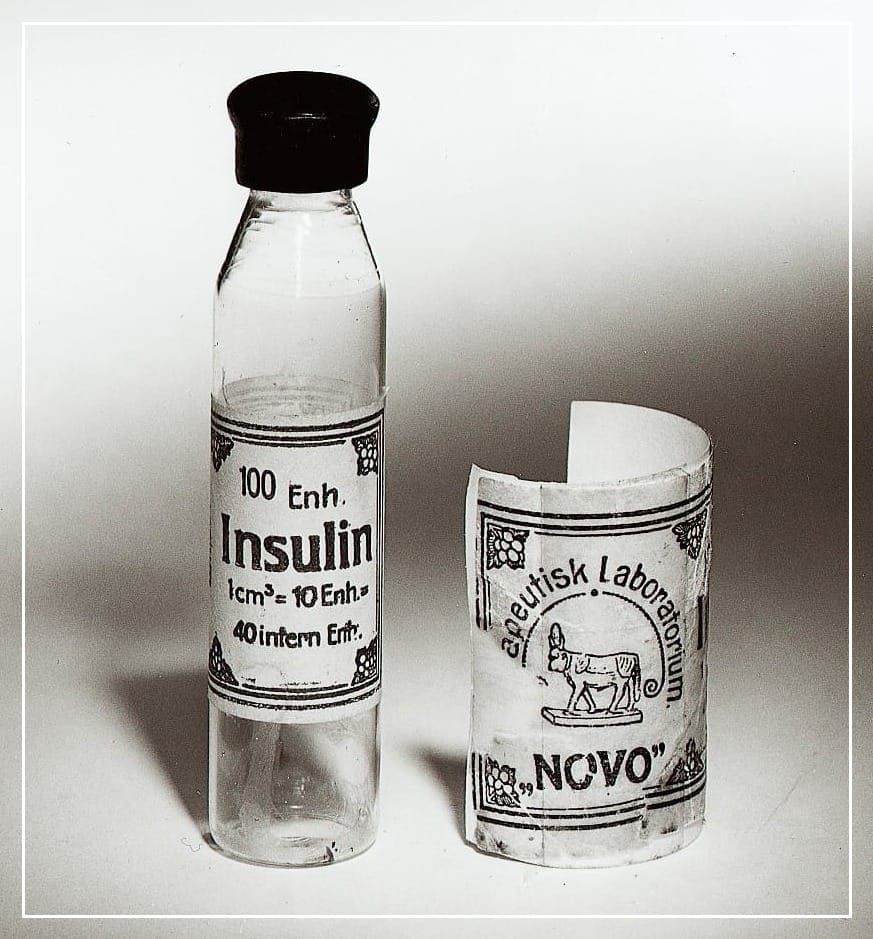
A note on currency before you read on: Novo Nordisk reports its results in Danish kroner, and every figure in this post, in every section, chart description and table, has been converted into USD for universal readability. Deal values that were originally disclosed in USD are left as it is. Where a deal was disclosed in other currency, I have converted it to USD at the prevailing average rate for that announcement year. All conversions are clearly approximate.
Novo Nordisk is probably one of the most envied companies in modern pharmaceuticals and also one of the most misread. The standard story goes like this: a sleepy Danish insulin maker got lucky with a weight loss drug, printed money for three years and is now spraying that money at every biotech it can find before the window closes. I have spent a long time with the deal data, the balance sheet, the pipeline and the primary records behind thirty transactions and I do not think that story is right on any of its three counts. The transformation was not luck, it was the compounding of decades of in-house peptide science. The capital allocation is not a spray: it has a logic and the logic is tighter and stranger than the press releases suggest.
The window is not closing in the way most people assume, because the biggest structural threat to Novo's dominance in obesity is not a competitor molecule, it is Novo's own market share, which has grown large enough to make the acquisitions it most needs to make, financially difficult. This article maps the whole machine from the ground up: the ownership structure that explains why every deal is a cash deal, the three tiers of the innovation network and why the pipeline funnel most analysts assume does not show up in the exit data, the thirty external bets and what they reveal about where Novo's scientific conviction actually sits and the five capital decisions that, read together, tell a more precise and more uncomfortable story than any of them tells alone.
Chapter 1: The history and big numbers
Novo Nordisk is the product of a 1989 merger and a 2000 corporate split. It is controlled by a foundation, not by ordinary shareholders. In FY2025 it booked sales of roughly $46.7 Bn, but its identity changed faster than its balance sheet: an insulin company is now an obesity company that is trying very hard to become a broad cardiometabolic and rare disease company.
The company traces back to two rival Danish insulin makers founded in the early 1920s, Nordisk Insulinlaboratorium and Novo Terapeutisk Laboratorium, which merged in 1989 to form Novo Nordisk. In 2000 the group separated its enzymes business into a distinct company (Novozymes, now Novonesis after its 2024 merger with Chr. Hansen), leaving Novo Nordisk focused on pharmaceuticals. According to the company's corporate history and the Novo Holdings disclosures, the entire group sits under the Novo Nordisk Foundation, with Novo Holdings A/S acting as the controlling shareholder of both Novo Nordisk A/S and Novonesis. In my opinion this ownership structure is the single most underappreciated fact about the company, because a foundation controlled firm can take a longer view on external investment than a firm answerable purely to quarterly markets, and we will see that long view show up repeatedly in the deal data.
That claim is usually made loosely. The Annual Report 2025 lets me make it precisely. Novo Holdings owns 28.1% of the share capital and controls 77.3% of the votes, and the instrument that does the work is the A share: 1,075 million unlisted shares carrying 100 votes each, against 3,390 million listed B shares carrying 10 votes each. The A shares alone command 76.0% of every vote in the company, and per the Foundation's Articles of Association, they cannot be divested. Novo Nordisk is not merely hard to acquire. It cannot be acquired, at any price, by anyone. Every move it makes in the M&A market, it makes as a permanent buyer that can never itself be bought.
For most of its life the structural story was insulin. The recent structural story is GLP-1. According to the Annual Report 2025, sales have more than doubled since 2019 to reach approximately $46.7 Bn, and obesity care sales alone climbed from around $0.9 Bn in 2019 to roughly $12.4 Bnin 2025. The most consequential structural change of the period was not a merger at all but a manufacturing acquisition: in December 2024 the parent Novo Holdings bought Catalent for about $16.5 Bn, and Novo Nordisk immediately acquired three of Catalent's fill-finish sites for roughly $11 to $11.7 Bn, according to company announcements and the Catalent completion release. That single move reshaped the company's cost base and, as we will see, its margins.
The actual sequence of events before Catalent acquisition is interesting. There was no prior Novo Holdings stake in Catalent. There was no validation position. What there was, was an activist. In August 2023, Catalent's own board formed a Strategic and Operational Review Committee to review the business "with a view towards maximizing value for all Catalent stockholders", which is the language of a company putting itself in play. Elliott Investment Management was already a significant Catalent shareholder and it drove that process. Novo Holdings announced the merger agreement in February 2024 and closed it in December 2024. Novo was a bidder in an auction that somebody else started.
One more piece of context belongs here, because everything in the chapters that follow reads differently without it. The company described in this article is in the worst period of its modern history. Chief Executive Lars Fruergaard Jørgensen and Chief Scientific Officer Marcus Schindler both departed during 2025, and Mike Doustdar now runs the company. In September 2025, Novo cut 9,000 jobs and booked roughly $1.2 Bn of one-off restructuring in the third quarter; the Annual Report 2025 notes administrative costs were hit by severance tied to those executive changes. The share price fell 48% during the year, from DKK 624 to DKK 325. And for 2026 Novo has guided to adjusted sales growth of minus 5% to minus 13% at constant exchange rates, blaming most favoured nation pricing in the United States, semaglutide compound patent expiry in certain international markets, reduced Medicaid obesity coverage and intensifying competition. The dealmaking documented below is not the confident expansion of a company at its peak. It is the capital allocation of a company that knows its next print is a decline.
Current Scale and Size (FY2025)
This is a company running at roughly $47 Bn sales with margins most industries can only dream of, but the margin softened in 2025 for reasons that are central to the open innovation story. According to the Q4 2025 investor presentation and the Annual Report 2025, the therapy area concentration is clearly shifting.
Therapy area mix (FY2025)
Two thirds of the company is diabetes, a quarter is obesity, and everything else looks like a rounding error that the company is desperately trying to grow.
Novo Nordisk therapy area mix (FY2025)
Source: Novo Nordisk Annual Report 2025; figures converted to USD by the author at the 2025 average exchange rate.
Top Brands by revenue per therapy area (FY2025)
Ozempic and Wegovy are not just the top brands, they are very close to being the entire company. This concentration is the strategic anxiety that drives the open innovation spending seen later in this post.
Novo Nordisk Top Brands by Revenue
FY2025 disclosed sales (USD Billion, approx.)
Source: Novo Nordisk company disclosure. Figures converted to USD by the author at the 2025 average exchange rate.
Novo has two enormous Stars, a cash generating insulin franchise that is a silent Cash Cow, and a Rare disease and cardiovascular set of Question Marks that it is trying to convert through external deals. According to FY 2025 report and market share commentary, Novo is the global branded obesity leader with a 59.6% branded volume share in a market whose branded GLP-1 obesity volume grew 104% year on year, while its global diabetes value share slipped to 30.1%. Insulin is a low growth, high share legacy. Rare disease and the cardiovascular pipeline are low current share in growing categories.
Novo Nordisk Growth Share Matrix
Brand positions by relative market share and market growth rate — FY2025
Positioning based on Novo Nordisk Annual Report 2025 market-share commentary; bubble area approximates FY2025 revenue. Author’s construction.
Financial health trend 2023, 2024 and 2025
Sales rose every year, but the story is not the topline, it is the margin. Gross margin fell from roughly 84.6% in 2023 to 81% in 2025, and net profit growth flatlined in 2025 after years of explosive expansion. Both shifts trace directly to external activity: the Catalent acquisition and a wave of deal related and restructuring charges. The chart stops one year too early to show what management already knows. For 2026 Novo guides to adjusted sales growth of minus 5% to minus 13% at constant exchange rates. A three year chart shows a company that grew every year. The company's own guidance says the streak ends now.
Novo Nordisk Financial Health 2023–2025
Revenue and Profitability Trends (USD Bn)
Sales grew 25% in 2024 and 6% in 2025; the slowdown in 2025 reflects intense competition from Eli Lilly's tirzepatide franchise and US pricing pressure, according to the Annual Report 2025. The more telling number is gross margin, which the company reported at 81% in 2025 versus 84.7% in 2024. According to the financial performance section of the Annual Report 2025, that 3.7 point fall was driven by amortisation and depreciation tied to the three former Catalent manufacturing sites, one-off restructuring costs from a company wide transformation, capacity expansion costs and adverse currency. Operating profit declined 1% as reported, but excluding $1.21 Bn in restructuring charges, underlying growth was 6%. Net profit grew just 1% to approximately $15.49 Bn. In my view this is the financial signature of a company digesting a very large vertical acquisition while simultaneously paying for an external dealmaking spree, a point I will develop in later sections of this post.
R&D investment and output (2023-2025)
Novo's return on research capital is extraordinary by industry standards, but it is falling. The company earns several dollars of gross profit for every dollar it spent on R&D the prior year, comfortably above typical large pharma benchmarks, yet the multiple compressed from roughly 8x toward 5x as R&D spending accelerated and margins thinned.
I have calculated Return on Research Capital (RoRC) as gross profit of the current year divided by R&D investment of the prior year. According to the company's reports, originally stated in Danish kroner, R&D was approximately $4.71 Bn in 2023, $6.97 Bn in 2024 and $7.87 Bn in 2025, each converted at that year's average exchange rate.
Novo Nordisk — R&D Investment, Gross Profit & RoRC
USD Billion · 2023–2025 · RoRC = Gross Profit ÷ R&D Spend
The RoRC fell from roughly 8.2x to 5.2x across three years. That is not a collapse in productivity, it is the predictable arithmetic of a company that grew R&D spending around 60% over two years (from approximately $4.71 Bn to approximately $7.87 Bn) while gross profit growth slowed as margins compressed. According to the Annual Report 2025, the 2025 R&D increase was driven by late-stage obesity trials, early research and cardiovascular development. For industry context, published analyses of pharmaceutical returns on R&D, such as the long-running Deloitte series on the return from pharmaceutical innovation, have for years reported internal rates of return on late-stage R&D in the low single digits, which makes a gross profit to R&D multiple above 5x look exceptional. The honest caveat is that RoRC defined this way flatters any company with very high gross margins and a small R&D base relative to sales, so I read Novo's number as a sign of pricing power and franchise concentration as much as research efficiency. The more that concentration is threatened, the more the company has to buy its next idea rather than grow it. Which brings us to the heart of this article.
Chapter 2: Open innovation past and present
Novo Nordisk runs open innovation on three levels that are easy to confuse. There is the company's own business development and licensing engine, which signs most of the deals you read about. There is the parent, Novo Holdings, which is one of the largest life science investors in the world and runs the actual venture capital arm. And there is the Novo Nordisk Foundation, which funds academia at a scale almost no corporate can match. Most commentators collapse these into one. I think keeping them separate is the key to understanding the whole system. In 2025 the company shifted decisively toward inbound dealmaking, signing a string of licensing and acquisition deals concentrated in obesity, oral small molecules and MASH. There is also a fourth element that the three-tier framing misses, and I only noticed it because of who fronted one of the deals below: the Novo Nordisk Bio Innovation Hub in Cambridge, Massachusetts, a company owned early innovation outpost that partners directly with US biotech. Its location is not incidental, and the geography section later in this chapter explains why.
Novo Nordisk Open Innovation Structure
Ownership chain, investment vehicles & deal-making tiers — hover or tap ⓘ for detail
Author’s schematic based on Novo Holdings and Novo Nordisk public disclosures. Dashed connector: Novo Holdings portfolio exits are not disclosed as flowing into Novo Nordisk BD&L acquisitions — hover or tap for detail.
Why every deal is a cash deal
Before looking at what Novo buys, it is worth understanding what it can pay with, because the answer shapes every transaction in the log. The usual formulation is that the Foundation's control means Novo cannot issue stock for acquisitions without diluting that control and therefore must pay cash. The first half is a fact and the conclusion is a fact, but the causal link between them does not survive contact with the share register. New shares would be issued as B shares carrying a tenth of the votes of the unlisted A shares, so paper dilutes the Foundation's votes at one tenth the rate it dilutes its economic stake. The dual class structure is precisely the device that would let Novo issue stock while keeping control. That is what dual class structures are for.
That is a choice, not a cage, and the contingent value right is the tell. A CVR is what an acquirer reaches for when it needs to bridge a valuation gap and share downside but will not hand over stock. Novo has built a house style around them: $6 per share on Akero, up to $24 per share on Metsera. It has engineered a way to pay in cash while still making the seller carry some of the scientific risk. So how much room is left? Operating profit of $19.3 Bn plus depreciation, amortisation and impairments of $3.3 Bn gives EBITDA of $22.6 Bn. Net debt of $14.4 Bn against that is leverage of 0.6x, conservative by any pharma standard. Take 2.0x as the ceiling investment grade pharma balance sheets are generally run to and the maximum tolerable net debt is $45.2 Bn, leaving headroom of $30.8 Bn. Add the $5.3 Bn to $6.8 Bn of free cash flow Novo has guided for 2026 and single transaction capacity is roughly $36 Bn to $38 Bn without issuing a share.
That number reframes everything that follows. Novo's $10.0 Bn Metsera bid consumed less than a third of the headroom available to it. The Catalent sites took 38%. Akero took 17%. This is not a company constrained by its ability to pay. It has room for five more Akeros or three more Metseras today, funded entirely with debt, without troubling its credit rating or the Foundation's votes. Whatever has been limiting Novo's external dealmaking, it is not the balance sheet and it is not the ownership structure.
Debt Capacity and Deal Headroom
Net debt vs. the 2.0x EBITDA ceiling — tap or hover a marker to compare
Shares issued to sellers, all deals to date
ZERO
Net debt today (0.6x EBITDA)
$14.4 Bn
Headroom available
$30.8 Bn
2.0x ceiling
$45.2 Bn
Deal comparison, positioned proportionally against $30.8 Bn headroom
Tap or hover a marker or card above to compare a deal against available headroom.
Catalent sites: $11.7 Bn (38% of available headroom).
Novo bid up to $86.20 per share, approximately $10.0 Bn, and lost to Pfizer at $86.25 per share. Price was not the constraint.
Akero: $5.2 Bn (17% of available headroom).
Author’s schematic based on Novo Nordisk public disclosures. Headroom = 2.0x EBITDA ceiling ($45.2 Bn) minus net debt today ($14.4 Bn). Deal markers are compared against available headroom, not against total capacity.
Open innovation modalities: current state and historical evolution
Novo Nordisk engages across all four classic open innovation modalities, but the weight has shifted sharply toward inbound over the period I studied.
Inbound innovation is now the dominant mode. According to company announcements and filings, recent inbound activity includes the acquisitions of Inversago Pharma (CB1 receptor, obesity) and Embark Biotech in 2023, Cardior Pharmaceuticals (RNA-targeted heart failure) and the three Catalent manufacturing sites in 2024, and Akero Therapeutics (efruxifermin for MASH) in 2025, alongside a wave of in-licensing deals: ocedurenone from KBP Biosciences (2023), EraCal and Lexicon's LX9851, UBT251 from The United Laboratories, the Septerna GPCR collaboration, the Omeros MASP-3 inhibitor zaltenibart, and the exercise of an option over a Kallyope-identified ligand in 2024. This is the engine that does most of the visible work.
Outbound innovation is the quietest modality. Novo licenses out far less than it licenses in, which is typical of a company with a cash rich franchise to defend rather than to monetise. The clearest outbound adjacent activity is the Novo Nordisk Foundation's open grant funding of science, which I treat separately because it is philanthropic rather than commercial.
Coupled innovation shows up as co-development and platform collaborations where both sides contribute. The Valo Health artificial intelligence collaboration, the Septerna GPCR partnership with its profit share option, and the long-running relationship seeded through Flagship Pioneering's venture creation model are the obvious examples, where Novo provides capital and disease expertise and the partner provides a discovery platform.
The most structurally interesting coupled deal, though, has gone almost unremarked. In March 2023 Novo signed with Dewpoint Therapeutics, which works on biomolecular condensates, the membraneless organelles that form inside cells by phase separation and whose dysregulation shows up across a range of diseases including diabetes. It was billed as the first condensate research collaboration aimed at insulin resistance and diabetic complications, and unlike most of Novo's platform deals its terms were fully disclosed: up to $55 Mn near term across two programmes covering an upfront payment, research funding and research milestones, plus up to $690 Mn in clinical, commercial and sales milestones with royalties across two commercial products. That is up to $0.7 Bn committed against a modality that did not exist as a drug discovery approach a decade ago.
Two features of that contract repay attention. The first is a modality flex clause: Novo can pursue small molecules against the condensate targets Dewpoint identifies, or take those same targets in-house and pursue non-small-molecule modalities using its own capabilities, with Dewpoint eligible for up to $107.5 Mn per product if it does. Novo bought the target, not just the chemistry. The second is what happened next. In June 2024, barely a year in, the two expanded the partnership, and the expansion was not about molecules at all: it paired Dewpoint's high content image-based phenotypic screening and genome-wide CRISPR screens with Novo's own Target Discovery Engine, explicitly to build translatable tools and procedures for future discovery. Novo started by buying a platform's output and came back to buy its method.
Platform and ecosystem activity is run largely through the parent, and here the conventional picture of Novo Holdings needs explanation on two counts. The first is structural. Holdings no longer runs the Seed, Venture, Growth, Asia and Principal line-up that its own 2024 disclosures described. As of the 2025 results it organises everything under two teams, Life Science Investments and Capital Investments, and Life Science Investments now contains Seed, Venture, Asia, Principal and two areas that did not exist when that framing was written: Planetary Health Investments and Quantum Investments. Quantum was initiated in 2024, made its first investments in 2025, and had reached $0.1 Bn by November 2025. A foundation built on insulin is now writing cheques into quantum computing, which tells you the parent is not organised around feeding Novo Nordisk's pipeline.
The second is the number, and it is the more important one. Novo Holdings closed 2025 with total assets under management of $97.7 Bn, and its current headline figure is $105.0 Bn. But total assets under management is not investable capital. It is dominated by the Novo Nordisk and Novonesis stakes themselves. The figure that matters for open innovation is Investment Assets, and that stood at $36.6 Bn, of which 52.2% sits in life science. So the actual pool of life science capital is on the order of $19.1 Bn, not the $80.0 Bn that a casual reading of headline AUM implies. I am being precise about this because the size of Novo Holdings is routinely used to argue that the group has near-unlimited external reach, and at $19.1 Bn of life science investment assets it plainly does not.
The composition of that pool is more revealing still. Within Life Science Investments, the largest single sub-sector is not biotech. It is Life Science Services at 41.3%, which is where Catalent sits. Biotech is 14.9%. MedTech is 9.5%, tools and diagnostics 7.5%, healthcare IT 7.0%. If Novo Holdings were the upstream discovery engine for Novo Nordisk's pipeline, biotech would dominate. It does not. The parent is allocated like a diversified life science investor, because that is what it is.
The three instruments inside the parent, and what each is actually for
Collapsing Novo Holdings into a single venture arm hides the fact that its instruments have different mandates, different risk profiles, and in one case no therapeutic relationship to Novo Nordisk at all.
Seed Investments, still widely called Novo Seeds, is the company creation engine. Its mandate is explicitly geographic rather than therapeutic: it creates and builds life science companies in Scandinavia, and its team is mandated to invest up to $20 Mn at a time. It closed 2025 with 36 portfolio companies valued at $0.6 Bn, having deployed $0.2 Bn during the year while its portfolio companies raised over $0.8 Bn from all sources. It runs an in-house SeedLab that validates experimental data, a network of Entrepreneurs in Residence, and a company foundry called de novo that was relaunched in 2025 with new leadership. Several of its companies sit close to Novo Nordisk's biology: Antag Therapeutics works on GIP receptor antagonism in obesity, AnaCardio on heart failure, Draupnir Bio on lipid targets, Acesion Pharma on atrial fibrillation. Proximity, however, is not the same as a handoff, and on the disclosed record no Seed company has been acquired by Novo Nordisk.
Venture Investments backs early clinical stage biotech and sits within the same 52.2% life science allocation. Principal Investments buys established life science companies outright, and it is the instrument that actually executed Catalent. The REPAIR Impact Fund is the one that should end the pipeline-feeder argument on its own. Novo Holdings established it in February 2018 on a commission from the Novo Nordisk Foundation, with a total budget of $0.2 Bn, to invest in companies developing therapies against resistant microorganisms. Its therapeutic relevance to Novo Nordisk's cardiometabolic franchise is zero, by design. It exists because the Foundation's mission covers infectious disease and green transition alongside cardiometabolic disease. A third of the structure that gets described as a funnel into Novo Nordisk has no funnel function whatsoever.
Then there is the evidence from the exits, which is where the theory meets the tape. In 2025 Novo Holdings added 12 new companies to its Investment Assets portfolio and 36 companies exited it. Not one of those exits was disclosed as an acquisition by Novo Nordisk. In January 2026 the Seed company Hemab Therapeutics completed a Nasdaq IPO. And in May 2026 LimmaTech Biologics, which Novo Holdings had backed through the REPAIR Impact Fund since 2023, agreed to be acquired by Eli Lilly. Holdings announced that exit, framing it as proof that impact investing "can contribute to both meaningful health impact and attractive financial returns", and the identity of the buyer did not register as a consideration.
That is the answer to the question the funnel thesis poses. Novo Holdings is a financial vehicle that optimises for returns on behalf of the Foundation, and when the best return comes from selling a portfolio company to Novo Nordisk's principal competitor, it sells to Novo Nordisk's principal competitor. The governance is not a formality. The Foundation publishes an explicit set of Guidelines for Philanthropic Collaboration with NNF Controlled Companies, and a separate Intellectual Property Policy for stand-alone grants, precisely to keep these entities at arm's length. The three tiers are real. The conveyor belt between them is not.
The Foundation's own innovation instrument
The largest single piece of the upstream tier is the BioInnovation Institute, and it deserves naming because its remit is not what the funnel thesis would predict. BII was established in Copenhagen in 2018 and is a Foundation vehicle: in January 2026 the Novo Nordisk Foundation allocated up to $0.9 Bn to BII on a funding frame running from 2026 to 2035. Its platform has helped create and develop more than 130 companies and attracted over $1.1 Bn in external funding, and since its founding, venture investment into Danish biotech has risen more than fourfold. It funds up to $3.5 Mn per project and $2.1 Mn per start-up through three programmes: Venture Lab, Bio Studio and BII Quantum Lab.
Look at what it is actually for. Its stated remit spans human health, planetary health and societal resilience, and the new funding explicitly extends it into AI and quantum. Its named partnerships are with Ferring and the Gates Foundation on women's health, the Villum Foundation on Power-to-X, and the Lundbeck Foundation on brain disease. Not one of them is obesity, diabetes or cardiometabolic. The Foundation's mission covers cardiometabolic disease, infectious disease and green transition, and BII is built to serve all three plus deep tech, not to stock Novo Nordisk's shelves.
I went looking for the case study that would demonstrate the funnel in practice, a BII company subsequently acquired, licensed or partnered by Novo Nordisk. I could not find one in the public record. That absence is not proof that the relationship has no value, and I would not push the point further than the evidence goes. But combined with what the Novo Holdings exit record shows, it means the Foundation to incubator to Novo Nordisk pipeline is a description of a structure that exists, not of a mechanism that has been observed to operate.
Major open innovation milestones
The table below is the spine of this article. Read down the "Year" column and you can watch a diabetes company turn into an obesity and cardiometabolic dealmaker, with the pace and size of deals accelerating violently from 2023 onward. The following are publicly disclosed deals and collaborations. Where a partner or financial term was not disclosed, I have marked it as such. I have prioritised deals that Novo Nordisk or the counterparty confirmed publicly.
Major Open Innovation Milestones
| Year | Partner | Focus Area | Deal Type | Disclosed Value (USD) |
|---|
No deals found. Try adjusting the filters above.
In 2018, five years before the supposed pivot and three years before Wegovy reached the US market, Novo signed a research collaboration and option agreement with Kallyope, a New York biotech built around the gut-brain axis, explicitly to discover novel peptide therapeutics for obesity and diabetes. Novo took an option on exclusive worldwide rights for up to six products, paid an upfront fee and funded the research, with a licence fee, milestones and royalties due if it exercised. No financial terms were disclosed and none have been since, which is exactly why the deal is invisible in every chart in this article.
It was not a dead option. In September 2024 Novo exercised, licensing a Kallyope-identified ligand and taking over preclinical and clinical development, manufacturing and commercialisation. So the clean story of a diabetes company that discovered obesity dealmaking in 2023 when the GLP-1 cash arrived is not quite right. Novo was buying external obesity biology in 2018, through a mechanism that is neither incretin nor amylin nor CB1. What changed in 2023 was not the direction of travel. It was the size of the cheques, and the willingness to disclose them. The Kallyope deal is also worth holding onto for a different reason: in an external programme whose disclosed record is dominated by write-downs, discontinuations and a lost auction, this is one of the very few documented cases of the machine working end to end. Platform in, validated ligand out, option exercised, asset taken forward. It cost, as far as anyone outside Novo can tell, almost nothing.
The sourcing model: how Novo finds and integrates external innovation
Novo Nordisk does not run a large branded corporate venture fund the way some peers do. The venture capital function lives in the parent, Novo Holdings, which is genuinely one of the heavyweight life science investors globally. So when people ask "what is Novo's CVC arm called?" the honest answer is that the real venture muscle is Novo Holdings, not a Novo Nordisk in-house fund.
What that structure does not do, on the evidence, is function as an internal pipeline from petri dish to product. The exit record settles it: 36 portfolio companies left the Novo Holdings portfolio in 2025 and none was disclosed as going to Novo Nordisk, while the most prominent recent exit went to Eli Lilly. Novo Holdings and Novo Nordisk are legally separate, the Foundation governance is explicitly designed to keep them at arm's length, and the published guidelines that do the keeping are public documents. The ecosystem is real and the surface area for handoffs is large. The handoffs themselves are not in evidence.
Geographic Sourcing of External Innovation
The deal log has a geography, and it is not the one the group's own structure would lead you to expect. Three things fall out of this table, and the second one is genuinely strange.
Novo Nordisk external innovation by geography
Share of committed external-innovation capital, by deal geography
Select a geography above to see deal count, capital committed, and example deals.
Example deals:
Hover or select a pie slice for details.
First, this is an American sourcing programme run from Denmark. The United States takes 82.7% of disclosed committed capital and 70% of deals, and strip out Catalent as a manufacturing outlier and it still takes 74.0%. Novo does not source globally in any meaningful sense. It sources from Boston, San Francisco and San Diego, and it has put its own Bio Innovation Hub in Cambridge, Massachusetts to do it.
Second, and this is the part I find hard to reconcile, Novo Nordisk barely touches the Danish ecosystem that its own parent and its own foundation spend heavily to build. Denmark and Scandinavia account for three deals and $0.8 Bn, which is 2.3% of external capital, and two of those three are the same counterparty, Ascendis Pharma, in 2017 and again in 2024. Across eleven years Novo Nordisk has done external deals with precisely two Danish companies. Meanwhile Novo Holdings' Seed Investments team is mandated to build life science companies in Scandinavia and holds 36 Nordic portfolio companies; the Foundation has committed up to $0.9 Bn to the BioInnovation Institute in Copenhagen through 2035; and venture investment into Danish biotech has risen more than fourfold since 2018. The group builds a Danish biotech ecosystem with one hand and buys American science with the other. If you were looking for a single number to settle whether the three-tier model is a pipeline or a portfolio, 2.3% is it.
Third, Asia is a structural hole. China accounts for exactly one transaction, UBT251 from The United Laboratories in 2025, at up to $2.0 Bn or 5.7% of disclosed capital. That single deal proves the capability exists and that Novo will pay for Chinese incretin chemistry when it wants it. What does not exist is any machinery behind it: no China R&D centre of consequence, no dedicated China sourcing fund, and no co-investment vehicle of the kind some peers have built. Novo Holdings does have an Asia operation, with offices in Singapore, Shanghai and Mumbai under Amit Kakar, but read its own description of what it invests in and the point becomes clear: medtech, life sciences tools and diagnostics, pharma services, healthcare IT, patient services and greentech. Therapeutics is not on the list. Asia is 2.1% of Novo Holdings' investment assets against 53.7% for Europe and 42.2% for North America. The parent's Asian arm is structurally incapable of feeding Novo Nordisk's pipeline, because it does not buy drugs.
I would call that a deliberate absence rather than an oversight, but it is an expensive one. Chinese biotechs have signed over a hundred licensing deals with American and European pharma since the start of 2025, and the molecules on offer are exactly the incretin and cardiometabolic chemistry Novo is buying elsewhere at higher prices. Novo did that trade once, liked it enough to make it its largest in-licensing commitment of the period, and has not repeated it. Every quarter that continues, the option gets more expensive.
Sourcing-Model Funnel
Flow of innovation from basic science to commercial integration
Note: Author’s schematic; partners per public disclosures. Foundation and Novo Holdings activity sit upstream of Novo Nordisk’s own BD&L.
Non-traditional partners, hospitals, patient groups, digital health and AI/ML
Novo runs three AI relationships of genuinely different types and the differences are the point. The oldest is Microsoft, signed in September 2022, a full year before Valo. It is a multi-year platform collaboration in which Microsoft supplies AI and cloud analytics to Novo's R&D organisation and the two named use cases are revealing: automated synthesis of scientific literature, patents and reports to point researchers at new findings and a disease programme in atherosclerosis aimed at predicting individual risk, identifying biomarkers and nominating drug targets. Obesity is not in scope. No financial terms were disclosed, because there are none of the usual kind to disclose.
Valo Health, signed in September 2023 and expanded in January 2025 from 11 to up to 20 programmes across obesity, type 2 diabetes and cardiovascular disease, is a fundamentally different instrument. Valo generates assets. Novo pays milestones and takes rights to specific molecules, and it paid $60 Mn for three preclinical assets under the framework. The output is compounds.
OpenAI, announced in April 2026, is different again and is the largest in scope. It runs across drug discovery, manufacturing, supply chain, distribution and corporate operations, with pilots underway and full integration planned by the end of 2026. OpenAI is set to train Novo's global workforce as well. Terms were not disclosed. Mike Doustdar was explicit that the aim "is not replacing our scientists, it's about supercharging them" and equally explicit that while it is not intended to cut the current workforce, it is intended to curb the pace of future hiring.
The structural distinction is what I want to draw out, because it exposes a measurement problem that runs through this whole article. Valo is an asset deal and carries a headline number of up to $2.8 Bn, so it appears in every committed capital chart here. Microsoft and OpenAI are capability deals. They carry no programme count, no milestone ladder and no disclosed value, so they appear in those same charts at exactly zero. That is not because they are small. It is because infrastructure does not get priced in press releases. Any reading of Novo's AI footprint that relies on disclosed deal values, including mine, systematically undercounts it.
Novo Nordisk Venture & BD Investments (2017–2025)
Disclosed deal values & strategic partnership timeline
Bubble size = deal value in USD billions · hover for details
Source: Novo Nordisk company announcements, SEC filings, BioPharma Dive, Fierce Biotech, Labiotech. Where a value was not disclosed, the bubble is sized at a standardised minimum.
Chapter 3: Capital deployment analysis
When you aggregate eight years of disclosed external capital, three patterns dominate. First, the money overwhelmingly chases obesity and adjacent cardiometabolic disease. Second, Novo plays a barbell of very early platform bets and very late clinical assets, with a relative thinness in the middle. Third, the single largest cheque of the whole period was not a drug at all, it was manufacturing capacity (Catalent), which tells you the binding constraint on this company has been the ability to make GLP-1, not the ability to invent it.
That third pattern is understated by the deal log rather than overstated by it. The Annual Report 2025 shows capital expenditure on property, plant and equipment of $9.1 Bn in 2025, up from $6.9 Bn in 2024, and that is entirely separate from the $11.7 Bn paid for the Catalent sites. In the same year, capital expenditure on intangible assets, which is where acquired R&D lands, was $4.5 Bn. Novo spent twice as much building its own factories in 2025 as it spent buying everybody else's science.
Committed external capital by therapy area
If defined committed capital is disclosed upfront plus disclosed maximum milestones, attributed to the primary indication, obesity and cardiometabolic disease (including MASH and the triple-agonist and GPCR platform deals) absorb the clear majority of disclosed committed capital from 2018 to mid-2026, with rare blood and cardiovascular a distant second, and pure manufacturing (Catalent, Novavax) forming a large separate block that I keep distinct because it is capacity, not science.
Committed External Capital by Category
Disclosed upfront and milestone commitments (2018–2026)
Almost everything Novo buys is "market penetration" or "product development" inside obesity and diabetes. True diversification into unrelated new markets is rare and, when attempted, tends to be cautious.
Novo Nordisk’s Strategy Matrix (2018–2026)
Stage preference by committed capital and deal count
By deal count, Novo signs far more early-stage and preclinical collaborations than late-stage acquisitions. But by committed capital, the few late-stage acquisitions (Akero, the attempted Metsera) dominate. It signs many cheap options and a handful of expensive certainties.
Deals by Stage at Close
Comparing deal volume vs. capital commitment across the development lifecycle
Committed Capital by Modality Across Years
Distribution of upfront and milestone commitments (USD Billion)
Entry phase vs current trial phase (as of June 2026)
Novo's barbell means many assets entered at preclinical and are still early, while a few entered late and are near or at market. Tracking entry phase against current phase shows how much patience the model requires.
Asset Phase at Entry
Tracking clinical progression of BD&L assets from deal entry to July 2026 — hover or tap for detail
What failed and what it cost
Two write-offs stand out in the public record: ocedurenone and the Inversago CB1 program. These are the visible scars of an aggressive sourcing strategy, and they are instructive about where Novo's external bets break.
According to the Annual Report 2024, Novo recorded an impairment loss of approximately $0.8 Bn related to ocedurenone, the hypertension and cardio-renal asset acquired from KBP Biosciences in 2023. In my opinion the ocedurenone impairment is the single most useful data point in this entire article for a founder, because it shows Novo will pay over a billion dollars for an adjacent space asset and then write it down without sentiment when the data disappoints. Discipline cuts both ways. The Inversago story is more instructive than a one-line discontinuation suggests, and the usual framing of it as a closed failure is too quick. The $1.1 Bn Novo paid in August 2023 bought two CB1 assets, not one. INV-347 was the follow-on. The lead asset was INV-202, now called monlunabant, and it is still alive.
Monlunabant's Phase 2a read out in September 2024: 243 people with obesity and metabolic syndrome, 16 weeks, once-daily oral dosing at 10 mg, 20 mg and 50 mg against placebo, from a baseline weight of 110.1 kg. Every dose beat placebo significantly. The 10 mg arm lost 7.1 kg against 0.7 kg on placebo. Two things in that result should have tempered the enthusiasm immediately. The first is arithmetic: 7.1 kg on a 110.1 kg baseline is about 6.4% weight loss, in a market where CagriSema was about to post 22.7% and where semaglutide alone does 16.1%. The second is that Novo reported "limited additional weight loss at higher doses", which is a flat dose response and the signature of a mechanism that has run out of room before it has run out of side effects. And the side effects are the ones the class has always had: mild to moderate neuropsychiatric events, principally anxiety, irritability and sleep disturbance, more frequent and dose dependent versus placebo. None were serious, but the shadow they cast is long, because Sanofi's rimonabant was approved in 2006 and had its European approval withdrawn in 2009 after studies found it doubled the risk of psychiatric disorders. Then in February 2025 monlunabant failed again, in a different indication. A Phase 2 in 254 patients with diabetic kidney disease missed its primary endpoint outright, showing no benefit over placebo on kidney function after 16 weeks, and the neuropsychiatric signal reappeared.
So: is this conviction in CB1, or is it sunk cost? The honest answer is that as of July 2026 Novo's own pipeline shows monlunabant in Phase 2 in obesity and in Phase 2 in diabetic kidney disease, which is to say Novo did not even drop the indication that failed outright. Meanwhile INV-347, the other Inversago asset, was killed in August 2025 despite a Phase 1 that Novo itself described as safe and well tolerated, and it was killed for pharmacokinetics and portfolio reasons rather than for neuropsychiatric ones. That combination is hard to read as pure scientific conviction. Novo dropped the CB1 asset that was clean and kept the CB1 asset that has missed twice and carries the class safety signal. What distinguishes monlunabant is not its data. It is that monlunabant is the only thing left that justifies the $1.1 Bn. I would put it this way for a founder: Novo will write down an adjacent-space asset like ocedurenone without sentiment, but it will keep funding a core-category asset well past the point where the data has earned it, because the alternative is conceding that the acquisition thesis was wrong. Discipline outside the core, patience inside it.
The visible scars are not limited to those two. In August 2025, alongside the leadership upheaval and the cut to guidance, Novo cleared out four programmes at once, and the pattern inside that clearout is not the pattern the deal log implies. NNC0519-0130, a once-weekly GLP-1/GIP co-agonist, completed a Phase 2 in June 2025 that hit its primary objective, delivering statistically significant weight loss against placebo across all doses at 36 weeks. Novo killed it anyway, citing portfolio considerations. This was the second GLP-1/GIP co-agonist Novo had abandoned in a year, after a once-monthly candidate was dropped in 2024 on the grounds that its profile "was not something that we would take into further clinical development". Zalfermin, a long-acting FGF21 analog, failed a Phase 2 in roughly 700 MASH patients, showing no improvement in liver fibrosis when combined with Novo's own semaglutide. MASH development ended. A Phase 1 in type 1 diabetes started in July 2025, but Novo was careful to say its purpose was "to generate data to inform potential future first human dose candidates rather than progress into next stage development phases", which is a polite way of describing an asset being harvested for information. ANGPTL3i, a monoclonal antibody for dyslipidemia, cleared Phase 1 safely and was cut for portfolio reasons. INV-347 went the same day.
Two of those four assets, the GLP-1/GIP co-agonist and the FGF21 analog, sit squarely inside the obesity and MASH core. Which means the tidy proposition that Novo only fails outside its core does not survive contact with the internal pipeline. It survives only if you look exclusively at acquired assets and ignore what Novo builds and kills itself. The zalfermin sequence deserves to be stated on its own, because I think it is the single sharpest buy-versus-build data point in Novo's entire external programme. In August 2025 Novo killed its own FGF21 analog in MASH after a 700-patient failure. In October 2025, roughly eight weeks later, it agreed to pay up to $5.2 Bn for Akero Therapeutics, whose lead asset efruxifermin is an FGF21 analog in MASH. Same modality, same indication, same year. Novo did not conclude that FGF21 does not work in MASH. It concluded that its FGF21 did not work in MASH, and then bought somebody else's at the top of the market. The largest "loss" of the period, though, was not a write-off at all but a deal that never closed, and the record of it is not what I originally understood it to be. I will take that apart in Chapter 5, because it turns out to be the most important thing in this article.
Chapter 4: Strategy and its implications
Plot Novo's deals on a grid of development stage against strategic distance from the core, and a clear hole appears. Novo is extremely well stocked with early, core, obesity-adjacent bets and with a few very late core assets, but it is thin on de-risked, late-stage assets in genuinely new domains. Its core challenge is therefore not a lack of ideas, it is a lack of near-term, needle-moving diversification away from a franchise that competitors and pricing pressure are actively eroding.
Strategic Complementarity Grid
Mapping disclosed deals by clinical stage and strategic distance
The assets that will decide the next five years
Three internal programmes carry more weight than any deal in the log, and the article would be incomplete without their data.
CagriSema is the asset on which Novo's near-term obesity defence rests, and its headline number is widely misread. It is a fixed-dose, once-weekly subcutaneous combination of cagrilintide 2.4 mg, a long-acting amylin analogue, and semaglutide 2.4 mg. Both components are Novo's own. REDEFINE 1 enrolled 3,417 adults with obesity or overweight and at least one comorbidity but without type 2 diabetes, ran 68 weeks, and was both placebo and active controlled. If all participants adhered to treatment, CagriSema delivered 22.7% weight loss against 2.3% on placebo. Forty percent of patients lost at least a quarter of their body weight, 23.1% lost at least 30%, and 50.7% of participants with obesity ended the trial below a BMI of 30, having started at a mean of 38. Body composition analysis showed fat mass down 35.7% and lean soft tissue down 14.4%. Discontinuation for adverse events was 6% against 3.7% on placebo, with gastrointestinal events dominating: nausea 55%, constipation 30.7%, vomiting 26.1%. REDEFINE 2, in 1,206 adults with type 2 diabetes, delivered 15.7% against 3.1%.
The number that matters is not 22.7%. It is 6.6. REDEFINE 1 carried active comparator arms, and semaglutide alone delivered 16.1% while cagrilintide alone delivered 11.8%. So the entire incremental benefit of adding an amylin analogue to semaglutide, in Novo's own pivotal trial, is 6.6 percentage points. That is the return on the whole cagrilintide programme, and the market's disappointment when CagriSema landed short of the 25% it had been guided toward was really a judgement about that increment rather than about the absolute number.
There is a design detail that explains part of the shortfall and that Novo has been transparent about: the protocol let investigators hold patients on a submaximal dose where they judged it appropriate. But the clearest evidence of how Novo itself read the result is that in June 2025 it started REDEFINE 11, a longer trial with protocol changes explicitly designed to "explore further weight loss potential". A company that believed 22.7% was the true ceiling does not run the trial again. Two further trials matter: REDEFINE 3 is an event-driven cardiovascular outcomes study, and REDEFINE 4 is an 84-week head-to-head against tirzepatide, which is the only test that will settle the competitive argument on evidence rather than on share data. As of July 2026 CagriSema is filed in obesity and in Phase 3 in type 2 diabetes, with the REIMAGINE 1 to 3 results presented at ADA in June 2026.
Amycretin, which now carries the international non-proprietary name zenagamtide, is the asset that should complicate any story about Novo needing to buy its way to a second engine. It is a unimolecular long-acting GLP-1 and amylin receptor agonist, one molecule hitting both receptors rather than two molecules co-formulated, and it is being developed in both subcutaneous and oral forms for obesity and for type 2 diabetes. Two Lancet papers published in June 2025 carried the early data. In a Phase 1b/2a of 125 adults with overweight or obesity, subcutaneous amycretin at the highest doses, up to 60 mg, produced body weight reductions of up to 24.3% against 1.1% on placebo at 36 weeks, with adverse events mild to moderate and predominantly gastrointestinal. In a Phase 1 of 144 adults, oral amycretin at 100 mg per day produced mean weight loss of 13.1% against 1.2% at just 12 weeks. In neither trial had weight loss plateaued when the treatment period ended, thus advancing to Phase 3 on the strength of Phase 1 and 1b/2a data and end of phase 2 regulatory meetings, without running a dedicated Phase 2 efficacy trial in obesity. As of July 2026 subcutaneous zenagamtide is in Phase 3 in obesity, with the oral form and the diabetes indications behind it in Phase 2.
The Wegovy pill is the third, and it is the one the market underrated. Oral semaglutide 25 mg was approved by the FDA on 22 December 2025 as the first and only oral GLP-1 for weight management, launched in the United States in January 2026 with self-pay pricing from $149 per month, and by June 2026 had passed three million prescriptions in just over five months. Novo's own 2026 outlook flags the risk it created: a potential negative impact on the growth of the injectable obesity category and on channel mix. Novo is knowingly cannibalising Wegovy injectable, which is what a company does when it would rather take the revenue itself than lose it.
Amycretin came from nowhere except Novo's own laboratories. So did cagrilintide. So did semaglutide, and so did the oral reformulation of semaglutide that became the Wegovy pill. Novo's four most valuable obesity assets, on any reasonable reading of the pipeline, are all internal. Against that, the external programme has so far produced one discontinued CB1 asset, one twice-failed CB1 asset still in Phase 2, one written-down cardio-renal asset, a triple agonist in Phase 2, and a $5.2 Bn MASH acquisition that has not yet read out. I am not arguing the external programme is worthless. I am arguing that the premise that Novo must source externally because its internal engine cannot deliver a second act is not what the pipeline shows. A 24.3% subcutaneous result at Phase 1b/2a, going straight to Phase 3, is the internal engine delivering a second act.
Chapter 5: What is Novo betting on?
Putting all the things together, different numerical relationships emerge that are not obvious from any single data point and that collectively make a specific claim about what Novo Nordisk's capital allocation is actually betting on versus what the deal announcements imply. The thread connecting them is this: at every decision point where the data is specific enough to test, Novo's capital follows the boundary of its own scientific competence more precisely than its stated ambition of becoming a broad cardiometabolic company would suggest. And at the one point where it tried to cross that boundary with money alone, it discovered that money was not the constraint.
RoRC compressed 37% while R&D spending grew 67%
Return on Research Capital, calculated here as current year gross profit divided by the prior year's R&D investment, fell from 8.2x in 2023 to 5.2x in 2025, a compression of 3.0 turns in two years, or 37%. (Author's calculation; not an official company reconciliation.) Over the same two years, R&D spending grew 67%, from $4.71bn to $7.87bn. Gross profit also grew, from $28.51bn to $37.84bn, a gain of 33%. The paradox is that both sides of the ratio expanded, but R&D grew at twice the rate of gross profit. The rate of R&D escalation has now outrun the gross-profit machine it is meant to replenish. Whether that is an investment that will re-rate RoRC upward in 2027-2028 as pipeline assets advance, or a structural step-down in research productivity, cannot yet be read from the data. What can be read is that the two-year trend is a compression, not a plateau, and the slope has not yet flattened.
Novo out-bid Pfizer for Metsera and still lost, its own market share is now an acquisition constraint
Novo's amended proposal of November 2025 valued Metsera at up to $86.20 per share, approximately $10 Bn, structured as $62.20 per share in cash plus a contingent value right of up to $24.00. Metsera's board formally declared it a Superior Company Proposal over Pfizer's revised $70 per share, worth roughly $8.1 Bn. Novo additionally offered to pay the $190 Mn termination fee Metsera owed Pfizer. Pfizer's final winning bid was $86.25 per share. Novo lost by five cents.
What beat Novo was not price. It was the Federal Trade Commission, which told Metsera that under Novo's two-step structure the upfront dividend to shareholders might never be paid, or might later be challenged or rescinded. Metsera's board switched on 7 November citing "value and certainty of closing", and described Novo's bid as carrying "unacceptably high legal and regulatory risks" relative to Pfizer's, whose deal had already been cleared. Novo's structure, which paid shareholders before antitrust review by taking non-voting preferred stock representing 50% of Metsera's share capital, existed precisely because Novo knew its review would be long. The structure was the tell.
The FTC warned Metsera that this upfront payment could later be clawed back or blocked entirely if regulators objected to Novo owning Metsera (since Novo already dominates obesity drugs). Pfizer's deal, by contrast, had already been cleared by regulators. So even though Pfizer's price was basically the same, it came with a "guaranteed" close. Novo's higher price came with a "maybe" attached. Novo's dominance made its money worth less to the seller than a weaker competitor's money. That is the uncomfortable arithmetic of this whole programme. The barbell is not a philosophy. The thin middle is not a preference. In the one category where Novo most needs to buy a finished asset, its own success has made buying finished assets structurally difficult.
The internal engine outperformed the external one, in the same categories, in the same year
Set the two programmes side by side on 2025 evidence alone. Internally, Novo produced amycretin, which delivered up to 24.3% weight loss at 36 weeks in a Phase 1b/2a and went straight to Phase 3 in both formulations without a Phase 2; CagriSema, which delivered 22.7% in a 3,417-patient Phase 3 and is now filed; and the Wegovy pill, approved on 22 December 2025 as the first oral GLP-1 for weight management and past three million prescriptions within roughly five months. Externally, in the same window, Novo discontinued INV-347, watched monlunabant miss a second Phase 2, took an $0.8 Bn write-down on ocedurenone against a $1.3 Bn headline, lost Metsera, and paid up to $5.2 Bn for Akero, which has not read out.
The sharpest illustration is FGF21, and it is worth restating as a finding rather than as an anecdote. In August 2025 Novo killed zalfermin, its own FGF21 analog, after it failed to improve liver fibrosis in roughly 700 MASH patients in combination with semaglutide. In October 2025 it agreed to pay up to $5.2 Bn for Akero, whose efruxifermin is an FGF21 analog in MASH. Novo's conclusion was not that the mechanism fails. It was that its own molecule was not competitive, and that the category was worth $5.2 Bn to re-enter.
This inverts the premise the article started from. The story is not a company whose internal engine has stalled, buying its way to a second act. It is a company whose internal engine is producing the best obesity data in its history, buying externally in precisely the places where its own chemistry has been beaten, and being blocked from buying in the one place where its share is largest. Novo's external innovation is not a replacement engine. It is a patch kit for specific internal failures, and it is deployed with real precision: FGF21 after zalfermin, MASH after zalfermin, triple agonism where it has no candidate of its own.
Every disclosed failure sits outside the GLP-1 core
Of the three disclosed external bet failures in the 2018-2025 period, all three sit outside the GLP-1 and oral obesity core: ocedurenone, a cardiovascular-renal asset, impaired by approximately $0.83bn against an acquisition cost of up to $1.3bn (a 64% write-down on disclosed value, author's calculation); INV-347, a CB1 receptor candidate in obesity but operating through a mechanism with a known psychiatric safety history; and Metsera, which failed as a deal rather than as a drug, lost to a competing bid. Meanwhile, every asset in the advancing category in the slope chart sits inside the core or directly adjacent: Akero in MASH, UBT251 in triple agonism, Corvidia's ziltivekimab progressing to Phase III. The asymmetry is complete in the disclosed record: zero core bets have failed, zero non-core bets have advanced on schedule. This is a sample too small to generalise, but the directionality suggests Novo's scientific edge, and its clinical development capability, is specific to cardiometabolic and incretin biology rather than portable across categories.
The company now leads in the Category it entered six years ago
As of the Annual Report 2025, Novo holds a 59.6% branded volume share in obesity, the category it entered commercially with Wegovy at scale from approximately 2022. Its diabetes value share, the category it has held for a century, is 30.1%. The obesity figure is now roughly twice the diabetes figure, measured on the most relevant basis for each category. The share inversion is not a coincidence of measurement; it reflects a category where Novo's product architecture gave it a structural head start over established pharmaceutical competitors, while in insulin and oral diabetes it faces decades of generic and biosimilar pressure. The external innovation strategy maps directly onto this inversion: every major obesity deal is defending and extending the category where Novo already leads, while the rare-disease and cardiovascular bets, thin as they are, represent the only current attempt to build a third leg.
Per-deal capital was flat while signing cadence doubled
In 2023, five disclosed deal entries totalled $5.875bn, an average of $1.175bn per deal. In 2025, nine disclosed deal entries with disclosed values totalled $10.762bn, an average of $1.196bn per deal. (Author's calculation from the deal milestone table; undisclosed-value deals excluded.) The average deal size was essentially unchanged, within $21m of each other, while volume nearly doubled. 2024's $3.276bn per-deal average is an artefact of a single transaction: strip Catalent, and the remaining three 2024 deals average $1.605bn, higher than 2023 but the same order of magnitude. The practical implication is that Novo's external innovation scaling is a volume strategy, not a ticket-size strategy. It is buying more bets at approximately the same per-bet cost, not paying larger and larger upfront sums for fewer, higher-confidence assets. This is consistent with the barbell: the preclinical end is cheap per deal, the late-stage end is expensive but rare, and the middle is thin.
So what?
SWOT Matrix
Novo Nordisk External Innovation Position
Strengths
- 59.6% branded obesity market share; Wegovy dominates category.
- FY2025 net profit of ~$15.5bn funds aggressive BD&L strategy.
- Three-tier sourcing structure (Foundation + Novo Holdings + BD&L) provides rare early-stage access competitors cannot replicate.
Weaknesses
- Single molecule profit dependency: semaglutide drives estimated 90%+ of franchise value.
- Gross margin compressed 3.7 percentage points (84.7% → 81.0%, FY2024–2025) from Catalent integration and restructuring.
- Visible external bet failures: $0.83bn ocedurenone impairment; INV-347 CB1 candidate discontinued.
Opportunities
- Oral obesity drugs, triple agonists, amylin, MASH, and AI discovery all commercially expanding categories where Novo is actively sourcing.
- Adjacent cardiometabolic and rare disease markets offer diversification pathways beyond core obesity franchise.
Threats
- Eli Lilly’s tirzepatide capturing obesity share; oral orforglipron and new entrants (Amgen, Roche, Zealand) emerging.
- US pricing pressure: MFN pricing agreement compresses realised price; government price negotiation expanding.
- Semaglutide patent exclusivity loss in select markets (2026+); compounded semaglutide available in US.
The arithmetic of this seven-year external programme, read at the level of capital flows rather than deal announcements, reveals a company that is running two simultaneous bets that are not the same bet dressed differently. The first is that the GLP-1 franchise, which the company now leads in branded volume at 59.6%, can be extended and defended through a high cadence preclinical sourcing programme averaging roughly $1.2bn per deal. The second bet is that manufacturing capacity is a more binding near term constraint than science, and Novo resolved that bet decisively in 2024 by committing $11.7bn to two manufacturing acquisitions, outspending nine preclinical science deals by $6.3bn.
The open question the data cannot yet answer is whether the RoRC compression is temporary, a consequence of front-loading R&D before the next pipeline inflection, or structural, a signal that the returns from external innovation at this scale and in this category are lower than the GLP-1 era suggested. That question will only resolve in 2027 or 2028, when the current preclinical cohort either reaches clinical proof of concept or does not. The RoRC trend from 8.2x to 5.2x will either reverse, confirming the front loading thesis, or continue compressing toward the low single digit multiples that describe most of the large pharma peer group. Until then, the capital decisions say: Novo believes the first bet is worth defending at almost any manufacturing cost, worth extending at a disciplined science price and not worth chasing past its own return model even when the market is watching.
Methodology & Disclaimer
This is a personal analytical perspective on Novo Nordisk's external innovation strategy based exclusively on publicly available information (SEC filings or equivalent, press releases, investor disclosures) current as of June 2026. This is NOT financial, investment, legal, or strategic advice. It does not constitute a recommendation to buy, sell, or invest in any company, security, or asset. Before making any decisions, readers must consult qualified financial advisors, investment professionals, and legal counsels.
While I have cross-checked sources and taken care to ensure accuracy, errors and omissions are possible. The onus of final verification lies entirely with the reader. I assume no liability for any losses, damages, or consequences resulting from reliance on this content. Drug development is inherently uncertain; all forward-looking statements about pipeline progression, market potential, or strategic outcomes are subject to significant risk and may not materialize. I have no financial interest in, affiliation with, or endorsement relationship with the company or any entities mentioned herein.
Currency note: all financial figures in this post are presented in USD for readability, converted from the company's reported Danish kroner. Income statement and other annual flow items (sales, profit lines, R&D, restructuring charges, impairments) use each year's average exchange rate against the US dollar (2019: 6.6698; 2022: 7.0779; 2023: 6.8916; 2024: 6.8954; 2025: 6.6149); balance sheet and point in time items (such as assets under management) use that year's year end closing rate. All conversions are the author's own and are approximate.
Feedback, corrections, and alternative perspectives are welcome. If you would like to collaborate or contribute or even borrow some analytical piece from this post, write to info@kletthamerinsights.com.
Sources used in this article
- Novo Nordisk. Annual Report 2025 (Financial performance; Innovation and therapeutic focus). https://annualreport.novonordisk.com/2025/
- Novo Nordisk. Q4 2025 Investor Presentation (full-year 2025 income statement). https://www.novonordisk.com/content/dam/nncorp/global/en/investors/pdfs/financial-results/2026/Q4-2025-investor-presentation-4Feb.pdf
- Novo Nordisk. Annual Report 2024 (Financials). https://annualreport.novonordisk.com/2024/strategic-aspirations/financials.html
- Novo Nordisk. Full-year 2023 company announcement (Financial report 1 Jan - 31 Dec 2023). https://www.novonordisk.com/news-and-media/news-and-ir-materials/news-details.html?id=167013
- Novo Nordisk. FY2025 Form 20-F summary (Wegovy/Ozempic brand sales; Akero terms; restructuring). https://www.stocktitan.net/sec-filings/NVO/
- U.S. SEC EDGAR. Novo Nordisk Form 6-K, Akero Therapeutics acquisition (Oct 2025). https://www.sec.gov/Archives/edgar/data/0000353278/000117184325006370/f6k_100925.htm
- U.S. SEC EDGAR. Septerna Form 8-K, Novo Nordisk collaboration (May 2025). https://www.sec.gov/Archives/edgar/data/0001984086/000119312525119386/d940594dex991.htm
- U.S. SEC EDGAR. Novo Nordisk Q1 2025 report (United Laboratories / UBT251; Lexicon LX9851). https://www.sec.gov/Archives/edgar/data/0000353278/000162828025022877/caq12025.htm
- BioPharma Dive. "Novo to acquire heart failure drug in $1B deal for Cardior." https://www.biopharmadive.com/news/novo-nordisk-cardior-rna-heart-failure-deal-acquisition/711212/
- BioPharma Dive. "Pfizer wins bidding war for Metsera with $10B offer." https://www.biopharmadive.com/news/metsera-pfizer-accept-offer-novo-ftc-obesity-drugs/805080/
- Catalent / Novo Holdings. "Novo Holdings Completes Acquisition of Catalent" (Dec 2024). https://www.catalent.com/catalent-news/novo-holdings-completes-acquisition-of-catalent/
- Pharmaphorum. "Novo completes $16.5bn takeover of Catalent." https://pharmaphorum.com/news/novo-completes-165bn-takeover-catalent
- Labiotech. "Novo Nordisk's pipeline plan" (Deep Apple, Replicate, Inversago INV-347 discontinuation, Septerna/UBT251). https://www.labiotech.eu/in-depth/novo-nordisk-pipeline/
- Valo Health / Globe Newswire. "Valo Health and Novo Nordisk expand collaboration" (Jan 2025). https://www.globenewswire.com/news-release/2025/01/08/3006064/0/en/Valo-Health-and-Novo-Nordisk-expand-collaboration-to-discover-and-develop-novel-treatments-for-cardiometabolic-diseases.html
- Fierce Biotech. "Novo Nordisk pays $60M for 3 preclinical assets as part of AI-powered cardio collab with Valo." https://www.fiercebiotech.com/biotech/novo-nordisk-pays-60m-3-preclinical-assets-part-ai-powered-cardio-collab-valo
- Ascendis Pharma. "Ascendis Pharma and Novo Nordisk Sign Collaboration" (TransCon, Nov 2024). https://investors.ascendispharma.com/news-releases/news-release-details/ascendis-pharma-and-novo-nordisk-sign-collaboration-development
- Swiss Biotech. "EraCal Therapeutics enters collaboration and license agreement with Novo Nordisk." https://www.swissbiotech.org/listing/eracal-therapeutics-enters-into-a-collaboration-and-license-agreement-with-novo-nordisk/
- Novo Holdings. "Total Income and Investment Returns ... 2023" (AUM, investment structure). https://novoholdings.dk/news/novo-holdings-reports-total-income-and-investment-returns-of-dkk-31-billion-euro4-2-billion-for-2023-total-assets-grow-by-38-to-dkk-1-114-billion-euro149-billion
- Novo Holdings. 2025 Annual Results (investment return; group structure). https://novoholdings.dk/annual-results
- Contract Pharma. "Novo Nordisk top company profile" (Cardior, Catalent, BD context). https://www.contractpharma.com/top-company-profile/novo-nordisk/
- CNBC. "Pfizer wins $10 billion bidding war for Metsera as Novo Nordisk exits." https://www.cnbc.com/2025/11/08/metsera-accepts-pfizers-10-billion-bid-in-ongoing-ma-battle.html
- Fierce Biotech. "Pfizer finalizes Metsera buy after contentious bidding war with Novo Nordisk." https://www.fiercebiotech.com/biotech/pfizer-finalizes-metsera-buy-after-contentious-bidding-war-novo-nordisk
- MacroTrends. Novo Nordisk revenue and gross profit history (USD cross-check). https://www.macrotrends.net/stocks/charts/NVO/novo-nordisk/revenue
- Exchange-Rates.org. Annual average exchange rates, US dollar against the Danish krone, 2023-2025. https://www.exchange-rates.org/exchange-rate-history/usd-dkk-2025
- Deloitte. "Measuring the return from pharmaceutical innovation" series (industry R&D return context, general benchmark). https://www.deloitte.com/