Mercks & Co's sprint against the KEYTRUDA patent cliff: will it cross the finish line?
Merck quietly became one of the most aggressive external innovation buyers in the industry. But when your entire strategy hinges on replacing a $25B drug before the patent clock runs out, is buying your pipeline fast enough? Read the mechanics of what Merck & Co is doing to avoid the fall.
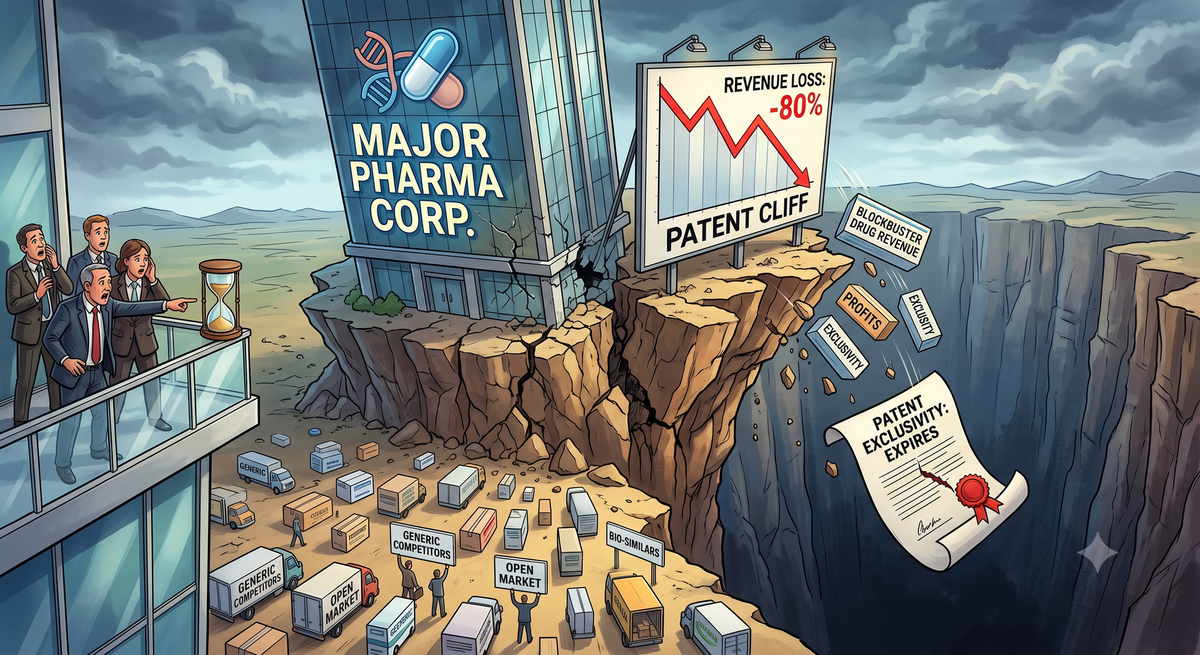
In 2025 the company most people still associate with one cancer drug quietly became one of the most aggressive external innovation buyers in the industry. KEYTRUDA still carried the business, roughly half of pharmaceutical sales, but the more interesting story sits underneath that number. Merck closed the Verona Pharma and Cidara acquisitions, wrote nine and ten figure cheques to a string of Chinese biotechs, and built a deal engine designed to answer one question that keeps its board awake: what replaces KEYTRUDA when the patent wall arrives at the end of this decade. This post is my read of how Merck sources, prices and integrates outside science, where the strategy is working, and where the gaps are still wide open.
Chapter 1: Keytruda's shadow on Merck's nos
Merck & Co. (NYSE: MRK, known as MSD outside the US and Canada) generated $65.01 Bn in worldwide sales in FY2025, growth of 1% nominally and 2% excluding foreign exchange. KEYTRUDA plus KEYTRUDA QLEX delivered $31.68 Bn, close to half of all pharmaceutical sales. This concentration is the single most important fact behind every open innovation decision the company makes. GARDASIL fell 39% to $5.23 Bn on weak China demand, a reminder that even a vaccine franchise can turn into a liability fast. GAAP net income was $18.25 Bn in 2025, up from $17.12 Bn in 2024 and a depressed $0.37 Bn in 2023 (the Prometheus charge year). R&D spend was $15.79 Bn in 2025, down 12% on lower business development charges. Return on research capital improved sharply as a result.
There is a second layer to the concentration problem and it changes the timing of the whole thesis. The KEYTRUDA risk is usually written as a single event at the 2028 patent expiry. It is not one event. It is two, arriving in sequence, and the first one is a pricing event rather than a competition event. Under the Inflation Reduction Act, a biologic becomes eligible for Medicare price negotiation eleven years after FDA licensure. KEYTRUDA was approved in September 2014, which put it on track for selection in February 2026 with a negotiated Medicare price effective in 2028. The 2025 reconciliation law, through its ORPHAN Cures Act provision, changed that calculation: the roughly thirteen months KEYTRUDA spent on the market as an orphan only melanoma drug no longer count toward the eleven year clock. That pushes its earliest selection to February 2027, with a negotiated price effective in 2029. KEYTRUDA was the single largest Medicare Part B drug by spending in 2023 at $5.6 Bn, and projected 2024 Medicare expenditure of $13.4 Bn made it the top drug on the delayed eligibility list. In plain terms, a negotiated Medicare price is not a question of whether but of when and the answer is now most likely 2029. CMS typically targets discounts in the 25% to 60% range for high revenue drugs. So the real shape of the KEYTRUDA cliff is a Medicare price cut landing around 2029 stacked on top of biosimilar entry from 2028. Merck is not sprinting toward one wall. It is sprinting toward two, one behind the other, and the revenue bridge has to clear both.
A short history and the current shape of the company
The Merck I am writing about is Merck & Co., Inc., Rahway, New Jersey, the American company that trades as MSD across most of the world. I want to be precise here because there is a separate, unrelated German company, Merck KGaA of Darmstadt, that also makes medicines and runs its own deal programme. The two have not been the same entity since the First World War, when the US business was seized and became independent. Throughout this post, every figure and every deal refers to the American Merck unless I state otherwise.
The modern company was shaped by three structural moves. The 2009 merger with Schering-Plough, worth roughly $41 Bn, gave Merck the asset that would become its defining product: the anti-PD-1 antibody that Schering-Plough scientists had been working on and that the world now knows as KEYTRUDA. In 2021 Merck spun off its women's health, biosimilars and established brands business as Organon, sharpening the remaining company around oncology, vaccines and hospital products. Then across 2023 to 2026 came a deal sprint, Prometheus, Acceleron, Harpoon, EyeBio, Verona and Cidara, that is the real subject of this post.
On FY2025 full year numbers, this is the scale we are dealing with. Total sales of $65.01 Bn split into pharmaceutical sales of $58.14 Bn and animal health sales of $6.35 Bn, with the small remainder in other revenues. The company invested $15.79 Bn in R&D, employed a worldwide base measured in the high tens of thousands, and produced GAAP net income of $18.25 Bn.
Therapy and Revenue Mix FY2025
Merck & Co's $65 Billion Revenue Mix 2025
FY2025 pharmaceutical and animal health sales broken down by therapeutic franchise
Hover or select a slice to see the details
The concentration problem is obvious the moment you draw that chart. Oncology, and within it KEYTRUDA, dominates. For the full year 2023, KEYTRUDA alone accounted for 41.6% of Merck's total revenue, and on FY2025 numbers KEYTRUDA plus QLEX at $31.68 Bn against total sales of $65.01 Bn is roughly 49% of the company. I believe this single fact, more than any market trend, is what drives every major external innovation decision the company makes.
The QLEX line inside that $31.68 Bn deserves more attention than a slash between two brand names. KEYTRUDA QLEX is the subcutaneous formulation of pembrolizumab, approved by the FDA in September 2025, and it is the most important piece of lifecycle defence Merck has against its own cliff. The intravenous version requires an infusion chair and a nurse for about thirty minutes. The subcutaneous version is an injection measured in a couple of minutes, which changes the economics of the site of care and the convenience calculus for patients and clinics. Two things follow from that, and both matter for the bridge. First, QLEX carries its own formulation intellectual property, so a company that builds an intravenous pembrolizumab biosimilar has not automatically built a substitute for QLEX; it would have to separately develop and prove a subcutaneous version.
Second, and this is the part the market is still arguing about, because CMS now treats subcutaneous and intravenous KEYTRUDA as the same drug for negotiation purposes, there is a live analyst thesis that QLEX could end up exempt from IRA negotiation on the same logic that exempted high dose Eylea once a biosimilar of the reference product entered, and that Merck may even settle with biosimilar developers ahead of the 2028 loss of exclusivity in a way that removes KEYTRUDA from the negotiation list entirely. I would not bank on that outcome, it is a contested reading of draft guidance, but it tells you why QLEX uptake is the number I watch most closely inside the franchise. If Merck can move a large share of KEYTRUDA volume onto a subcutaneous formulation with separate IP before biosimilars arrive, the cliff flattens into a slope. Bloomberg Intelligence has gone as far as to argue meaningful pembrolizumab erosion may not really bite until around 2033 rather than 2028, worth roughly $22 Bn in retained revenue against a more pessimistic path. That is the difference between a controlled descent and a fall.
Top brands by therapy area (FY2025)
The table below pulls the leading revenue generators in each franchise straight from the FY2025 product disclosures.
| Therapy area | Top brand | FY2025 sales ($ Bn) | Note |
|---|---|---|---|
| Oncology | KEYTRUDA / KEYTRUDA QLEX | 31.68 | 7% growth, the franchise anchor |
| Oncology | Lynparza (alliance) | 1.45 | Partnered with AstraZeneca; 11% growth |
| Oncology | Lenvima (alliance) | 1.05 | Partnered with Eisai; 4% growth |
| Oncology | WELIREG | 0.72 | 41% growth, HIF-2 inhibitor from Peloton |
| Vaccines | GARDASIL / GARDASIL 9 | 5.23 | 39% decline, China demand collapse |
| Vaccines | ProQuad / M-M-R II / Varivax | 2.45 | Stable pediatric franchise |
| Vaccines | Capvaxive | 0.76 | New adult pneumococcal launch |
| Hospital Acute Care | BRIDION | 1.84 | 4% growth, facing generic entry |
| Hospital Acute Care | Prevymis | 0.98 | 25% growth |
| Cardiometabolic & Respiratory | WINREVAIR | 1.44 | From the 2021 Acceleron acquisition |
| Diabetes | Januvia | 1.60 | 20% growth on US pricing, post-exclusivity internationally |
| Animal Health | BRAVECTO line | 1.10 | Companion animal franchise; 1% growth |
To make sense of where Merck needs outside help, I find it useful to plot the major brands on a growth-share matrix. KEYTRUDA is the cash cow that funds everything, GARDASIL has slipped from star to question mark almost overnight, and the recently acquired or launched assets (WINREVAIR, Capvaxive, Welireg, Ohtuvayre) are the stars and question marks the company is betting on for the post-2028 era.
Merck's Brand Portfolio on a Growth-Share Matrix
hover above bubbles to show details
KEYTRUDA
The core driver of Merck's financial strength. Generates massive, reliable cash flow (over 55% of pharmaceutical revenues) to fund R&D and pipeline expansion.
I want to be careful not to overstate the precision of a BCG matrix. The axes are judgements, not measured market shares. But the strategic message holds: Merck has one enormous cash cow approaching a cliff, a vaccine franchise that just slid the wrong way, and a thin band of genuine stars. That is precisely the profile of a company that has to buy growth from outside.
Financial health across 2023, 2024 and 2025
Merck & Co Three Year Financial Trend
Financial execution of core parameters spanning Fiscal Years 2023 – 2025
Total Revenue
Steady top-line expansion driven by strong demand in vaccine and oncology channels, offsetting competitive dynamics across secondary therapeutic fields.
The three-year financial story is dominated by one accounting event. In the second quarter of 2023 Merck booked a $10.2 Bn pre-tax charge for the acquisition of Prometheus Biosciences, recorded entirely as research and development expense, which is why GAAP net income for the full year 2023 collapsed to $0.37 Bn even though the underlying business was healthy. Strip that out and 2023 was a perfectly normal year.
From 2024 to 2025 the picture is one of slow top-line growth and strengthening margins. Full-year 2025 worldwide sales reached $65.01 Bn, up 1% nominally and 2% excluding foreign exchange. GAAP net income attributable to Merck rose to $18.25 Bn in 2025 from $17.12 Bn in 2024, a 7% increase. The biggest swing factor inside the year was GARDASIL. Sales of GARDASIL and GARDASIL 9 fell 39% to $5.23 Bn, driven primarily by lower demand in China. That is a $3.35 Bn revenue hole opened in a single franchise in twelve months, and the fact that total sales still grew tells you how hard oncology and the new launches worked to fill it. WINREVAIR, the sotatercept asset that came in through the 2021 Acceleron acquisition, grew from $0.42 Bn to $1.44 Bn year on year, and Capvaxive grew from under $0.1 Bn to $0.76 Bn. In my view this is the clearest evidence that the externally sourced pipeline is already carrying real commercial weight.
The GARDASIL number deserves to be read as a strategic event, not a one off demand wobble, because Merck's own response tells you how serious it is. Demand in China began slipping in the second quarter of 2024, which management attributed to the country's anti-corruption crackdown in healthcare and to weaker discretionary consumer spending. By February 2025 the problem had reached the point where Merck paused GARDASIL shipments into China entirely to let its partner Zhifei Biological Products work down its bloated inventory, initially through mid-2025, then extended to at least the end of 2025. In the same breath the company withdrew its long standing target of $11 Bn in GARDASIL sales by 2030.
I read that as an admission that the previous growth story for GARDASIL is gone and a new one has not yet been written. Senior leadership still frames China as a long-term opportunity given the large unimmunised female and now male population and Merck is leaning on the male indication and other geographies to rebuild, but there is no clean recovery timeline on the table. This matters for the central thesis because it moves the revenue pressure forward in time. The bridge is not only about replacing KEYTRUDA in 2028 and beyond. It is already absorbing a multi-billion dollar hole in vaccines today. WINREVAIR and Capvaxive are not building a cushion for the future; they are plugging a leak in the present while the cliff approaches.
R&D investment and return on research capital
Return on Research Capital: 2023 to 2025
A comparison of R&D investments, gross profitability, and overall capital effectiveness (RoRC)
Fiscal Year 2024
- R&D Investment $17.90 Bn
- Gross Profit $48.98 Bn
-
RoRC Multiple 3.33xGP ($48.98B) / FY2023 Org R&D ($14.70B)
Analyzing normalized capital cycles reveals peak performance in FY 2024. Normalizing the FY 2023 baseline (removing Prometheus charge distortion) establishes an organic RoRC baseline of 3.33x.
The R&D line at Merck is genuinely hard to read because acquired in-process R&D charges run straight through it. Reported R&D expense was $15.79 Bn for the full year of 2025, a decrease of 12% compared with 2024, primarily due to lower charges for business development activity. In 2023 the comparable figure was $30.53 Bn, inflated by the $10.2 Bn Prometheus charge; organic R&D excluding that charge was approximately $14.7 Bn. In 2024 it was $17.94 Bn, still carrying licensing charges for the Daiichi Sankyo collaboration and early LaNova payments.
On an organic basis, Merck's RoRC was 3.25x in 2023 (FY2023 gross profit of $44.01 Bn divided by FY2022 R&D of $13.55 Bn), 3.33x in 2024 (FY2024 gross profit of $48.98 Bn divided by organic FY2023 R&D of $14.7 Bn), and 2.71x in 2025 (FY2025 gross profit of $48.63 Bn divided by FY2024 R&D of $17.94 Bn). Published industry analyses of large-cap pharma typically place median RoRC in the 1.5x to 2.5x range depending on how acquired R&D is treated, so Merck's clean 3.25x to 3.33x range sits well above the median. The more important point for this post is qualitative: Merck has deliberately shifted a large share of its "research" spend from internal labs to business development cheques, and the in-process R&D charges are the accounting footprint of that shift. The company is, increasingly, buying its pipeline.
Chapter 2: Open innovation past and present
Merck runs the full spectrum of open innovation: inbound M&A and licensing, outbound out-licensing, coupled co-development, and a platform layer of corporate venture funds and accelerators. The defining inbound pattern of 2023 to 2026 is a wave of Chinese biotech licensing deals (LaNova, Hansoh, Hengrui) plus mid-sized US and UK acquisitions (Prometheus, Harpoon, EyeBio, Verona, Cidara).
Merck's corporate venture capital is split cleanly: MRL Ventures Fund for early-stage therapeutics, Merck Global Health Innovation Fund for digital health and data. The Moderna personalised cancer vaccine collaboration (V940/intismeran autogene) is the model coupled deal: shared cost, shared profit, shared risk, attached to KEYTRUDA. The strategic logic everywhere is the same: assemble enough externally sourced revenue to survive the KEYTRUDA patent cliff at the end of this decade.
Open innovation modalities, current state and historical evolution
Merck engages in every recognised mode of open innovation, and I find it cleanest to organise them into their respective buckets.
Inbound innovation is where Merck spends the most money and management attention. It runs the full ladder: licensing in compounds and platforms, acquiring whole biotech companies, acquiring single assets, making minority venture investments, and entering joint development agreements. The acquisitions of Prometheus ($11.0 Bn, immunology), Acceleron ($11.5 Bn, cardiopulmonary), Harpoon (roughly $0.68 Bn, T-cell engagers), EyeBio (up to $3.0 Bn, ophthalmology), Verona Pharma (roughly $10 Bn, respiratory), and Cidara (roughly $9.2 Bn, antivirals) are all inbound. So are the large Chinese licensing deals covered below. Merck completed the $11.5 Bn acquisition of Acceleron Pharma in 2021, bringing sotatercept into the pipeline; that asset was subsequently approved as WINREVAIR for pulmonary arterial hypertension in March 2024.
Outbound innovation is smaller but real. Merck out-licenses compounds it chooses not to develop internally, contributes IP to research consortia, publishes openly through Merck Research Laboratories, and runs an Impact Venture Fund that channels capital toward global health access goals. The company's Impact Venture Fund portfolio represents commitments totalling approximately $55 Mn, with Merck an active member of the Global Impact Investing Network. Other revenues in the FY2025 accounts include upfront and milestone payments received for out-licensed products, totalling $138 Mn across the four quarters of 2025, a modest but recurring outbound income stream.
I want to be precise about what this outbound line is and is not, because it is easy to over read. The Impact Venture Fund is a distinct vehicle from both the therapeutics venture arm and the digital health arm; its mandate is global health access rather than pipeline scouting, so it should not be counted as part of Merck's commercial deal engine. The $138 Mn of out-licensing income is real recurring cash, but it is a rounding error against a deal ledger that committed more than $50 Bn of inbound value across the same window. The honest summary is that Merck is overwhelmingly a net buyer of external innovation. Its outbound activity is a tidy up function for assets that no longer fit the strategy and a reputational programme for access, not a second engine.
Coupled innovation is the bilateral exchange category, and Merck's flagship example is the Moderna partnership. Merck exercised its option in 2022 to jointly develop and commercialize the personalised cancer vaccine mRNA-4157/V940, with Merck and Moderna sharing costs and any profits equally under a worldwide collaboration. The Daiichi Sankyo antibody drug conjugate alliance, announced in October 2023, is structurally similar: a co-development arrangement worth up to $22 Bn across three ADC candidates, with shared economics and governance. Merck also runs multi-year research collaborations with academic medical centres where IP and insight flow in both directions.
Platform and ecosystem is the network layer. Merck operates two distinct corporate venture vehicles, the MRL Ventures Fund and the Merck Global Health Innovation Fund, plus accelerator programmes including MSD IDEA Studios in Singapore and Berlin, and a Digital Science Studio. These give Merck sight lines into hundreds of early stage companies without committing full acquisition capital, and they create a relationship pipeline that can later convert into licensing or M&A.
The historical evolution matters. A decade ago Merck was, by its own reputation, one of the more internally focused large pharma companies, content to rely on Merck Research Laboratories. The KEYTRUDA patent cliff changed the culture. Business development moved from a support function to the centre of strategy, and the period from 2021 onward shows a step change in both the number and the size of external deals.
Major open innovation milestones
The table below collects the publicly disclosed external innovation milestones for Merck & Co. from 2015 to mid-2026. I have included only deals Merck itself disclosed through press releases, SEC filings or earnings materials, and I have flagged where financial terms were not disclosed.
Open Innovation Milestones
Merck & Co. publicly disclosed partnerships (Jan 2015 to Jun 2026)
| Year | Partner | Focus Area | Deal Type | Disclosed Terms |
|---|
The pattern in the table is the story. The metabolic licensing thread begins earlier than the China pivot. In 2020 Merck quietly licensed efinopegdutide, a GLP-1/glucagon dual agonist, from South Korea's Hanmi Pharmaceutical for just $10 Mn upfront, repositioning an asset that Janssen had previously abandoned in obesity for the NASH indication at a steep discount. That deal does not get the attention the China licences get because the cheque was small and NASH was still an unproven regulatory category. But it matters for scope: it is the earliest incretin biology bet in the deal log and it means Merck's interest in metabolic disease predates the Hansoh and Hengrui deals by four years. Then look at 2024 and 2025 specifically: four separate licensing agreements with Chinese biotechs across oncology, obesity and cardiometabolic disease. As reported in coverage of the Hengrui deal, this was the third time Merck tapped Chinese biotechs for licensing deals; toward the end of 2024 the company struck multi-billion-dollar deals with Hansoh Pharma and LaNova Medicines. The strategic driver is stated plainly in the same coverage: Merck intends to diversify its revenue base, which had become highly dependent on KEYTRUDA.
Open innovation sourcing model, how Merck finds and integrates external innovation
Merck's sourcing engine sits inside Merck Research Laboratories and its dedicated Business Development and Licensing organisation, which the company describes as working across the full maturity spectrum from early-stage science to clinical-stage programmes. The BD&L team builds early relationships with portfolio companies through the MRL Ventures Fund before any licensing or acquisition discussion begins.
On the academic side, Merck funds and collaborates with major research universities and academic medical centres, though it discloses these arrangements less consistently than its commercial deals. The publicly visible relationships skew toward translational and clinical research rather than basic science, and toward computational and data science as the company builds out artificial intelligence capability. Where Merck does name research partners, the work tends to be translational (moving a validated target toward the clinic) or clinical (running trials with academic medical centres as principal investigators), with IP ownership typically negotiated deal-by-deal.
Geographically, the sourcing model has shifted hard in two directions simultaneously. Acquisition targets remain mostly American and occasionally British or Israeli, consistent with where venture-backed biotech clusters sit. Of Merck's 33 completed acquisitions through mid-2026, 24 transactions were concentrated in the United States, with the United Kingdom and Israel also notable. But the licensing deals have pivoted decisively toward China. I believe this reflects a genuine arbitrage: Chinese biotechs have built high-quality assets in classes like PD-1/VEGF bispecifics and oral GLP-1s, and they have been willing to license global ex-China rights at upfront prices far below what a comparable US-origin asset would command.
Startup engagement and corporate venture capital
Merck runs two clearly separated corporate venture vehicles, and the separation is deliberate.
MRL Ventures Fund (MRLV) is the therapeutics arm. MRLV is Merck's therapeutics-focused corporate venture group, headquartered in Cambridge, Massachusetts, investing globally in early-stage, preclinical therapeutics companies across all modalities from small molecules to cell therapies, with Peter Dudek, Ph.D. serving as President and Managing Partner. Its operating model is unusually hands-on: MRLV leads or co-leads with sustained capital of up to $25 Mn per company, initially investing from concept to investigational new drug application, taking director or observer board roles, and maintaining a robust firewall from the broader Merck corporation. That firewall matters: it lets MRLV invest in companies that might later negotiate with Merck's BD&L team without a conflict of interest, and the fund explicitly builds early relationships with BD&L colleagues so a portfolio company can graduate into a licensing or acquisition conversation.
MRLV has made roughly 55 investments since its 2015 founding, with recent cheques including Therini Bio (backed in May 2025, working on inflammatory disease driven by vascular dysfunction), PAQ Therapeutics, Topo Therapeutics, and InduPro, which raised an $85 Mn Series A in June 2024 for a protein proximity platform generating bispecifics and ADCs in oncology and autoimmune disease. The portfolio skews exactly where you would expect a scouting fund attached to an oncology and immunology house to look. But here is the analytical point that matters, and it is a critical one for judging whether MRLV earns its place in the strategy.
The stated purpose of a strategic corporate venture arm is to convert early relationships into proprietary deal flow, portfolio companies that graduate into Merck licensing or acquisitions. I could not confirm a single named case of an MRLV portfolio company being subsequently acquired by Merck & Co. That absence does not prove the funnel is broken, seed-stage therapeutics take many years to reach the point where an acquisition makes sense and the fund is only a decade old. But it does mean MRLV's strategic value to BD&L is, as of mid-2026, asserted rather than demonstrated. The firewall that protects against conflicts also, by design, keeps MRLV from behaving like an acquisition pipeline. On the evidence available, MRLV looks closer to a scouting and optionality tool that generates board level sight lines and financial returns than to a proven M&A feeder. It is just not the thing corporate venture capital is usually sold as.
Merck Global Health Innovation Fund (MGHIF) is the digital and data arm. Founded in 2010, it is a growth investor partnering with digital health and data science companies that facilitate and optimise biopharmaceutical operations. As of early 2025 the fund was an active investor having invested in 74 companies across primarily Series B rounds in US-based startups. Its track record is substantial: the MGHIF portfolio has seen 2 unicorns, 3 IPOs and 23 acquisitions, including companies like Livongo, Transcarent and Unite Us. The fund was sized at $250 Mn or more at launch and focuses on digital health, healthcare IT, diagnostics and data science. MGHIF also runs three accelerators: the MSD Digital Science Studio, MSD IDEA Studios Singapore, and MSD IDEA Studios Berlin, each investing up to $2 Mn in early-stage companies.
A third, smaller vehicle, the Impact Venture Fund, deploys approximately $55 Mn in commitments toward global health access investments, with Merck an active member of the Global Impact Investing Network, TONIIC and Investors for Health. Merck does not publish a clean year by year venture investment count, what is disclosed is the cumulative MGHIF portfolio (74+ companies), the trailing twelve-month pace (one new investment in the year to April 2025), the cheque sizes for MRLV (up to $25 Mn), and a handful of named exits. Anything more granular than that would be speculation.
Non-traditional partners, hospitals, patient groups, digital health and AI/ML
Merck's engagement with non-traditional partners has grown alongside its data science ambitions, though much of it is disclosed thinly. On hospitals and health systems, Merck runs real-world evidence and clinical research relationships with academic medical centres, primarily to support oncology and vaccine programmes. Merck Research Laboratories explicitly lists real-world evidence and translational medicine as active research modalities. On patient advocacy, the company funds disease-specific organisations and patient registries, especially in oncology and in rare disease areas entered through acquisition; these relationships are mentioned in sustainability disclosures but rarely quantified. On digital health, the MGHIF portfolio is the main vehicle, with investments and exits in companies spanning care navigation, data networks and analytics. On AI and machine learning, Merck has built internal data science and AI capability inside Merck Research Laboratories and describes data science and artificial intelligence as a named area of innovation on the company's research website.
Chapter 3: Capital deployment analysis
Across 2016 to mid-2026, the last full decade of disclosed deal activity, Merck's committed external capital concentrated overwhelmingly in oncology, with cardiometabolic/respiratory a clear and deliberate second tier. On an Ansoff lens, the strategy is dominated by market penetration and product development around existing oncology and cardiometabolic strongholds, with obesity and respiratory representing genuine diversification plays. By stage, Merck concentrates the majority of its capital in Phase II and, separately, in Phase III assets, using licensing to reach earlier, cheaper science, especially out of China and Korea. The TIGIT programme failures show where even well-resourced internal programmes can stall at Phase 3.
Before following the money it is worth naming who is standing behind Merck's shoulder when these cheques are signed, because the ownership structure shapes the deal style. Merck has no controlling shareholder. Institutions own roughly three-quarters of the company, led by the index giants: Vanguard at around 9% to 10%, BlackRock at around 8%, State Street at around 4.5%, with the top 25 holders together owning less than half the register. This matters for business development in a specific way. A company owned by passive index funds and answerable to quarterly earnings would have a structural bias toward deals that are either immediately accretive or have a visible near term catalyst and away from long dated moonshots that dilute earnings today for optionality a decade out. I think that bias is legible in the data that follows: the heavy concentration in de-risked Phase II and Phase III assets, the cash funded acquisitions, the simultaneous $10 Bn buyback authorisation. This is a deal engine tuned to keep the current owners comfortable while the cliff approaches, not one built to take swings that would unsettle them.
Therapeutic area weighting by committed external capital
When I total the committed external capital (upfront plus disclosed maximum milestones) by primary therapeutic area for the 2016 to mid-2026 window, oncology dominates decisively and the second tier tells the diversification story clearly.
Where is the capital flowing?
Percentage of total committed external capital by therapeutic area
Hover or select a slice to see the details
Oncology Portfolio
The primary destination of external capital, heavily driven by massive co-development and licensing alliances (e.g., Daiichi Sankyo, Eisai, AstraZeneca).
I want to be transparent that this pie is sensitive to how you treat biobucks. The Daiichi Sankyo alliance has a $22 Bn ceiling but only $5.5 Bn was committed near-term, so oncology's share is overstated if you read maximum milestones as real cash. On an upfront only basis the picture flattens considerably, and cardiometabolic and respiratory (Acceleron plus Verona, both completed cash acquisitions) rises in relative weight. Either way the conclusion holds: Merck is buying oncology to defend its stronghold and buying cardiometabolic and respiratory to build its next one.
Merck's deals on the Growth Matrix
Mapping strategic partnerships and pipeline development across Ansoff's quadrants
Market Development
Diversification
Market Penetration
Product Development
The Ansoff read is clarifying. Most of Merck's capital is defensive, market penetration and product development around the oncology stronghold it cannot afford to lose. The diversification quadrant, obesity, COPD, a new lipid market, influenza prevention, is the smallest and newest, and the one Merck's future depends on getting right. Obesity through Hansoh, COPD through Verona, a new lipid lowering market through Hengrui, influenza prevention through Cidara. In my opinion the diversification quadrant is where Merck's future depends on getting external innovation right, because that is where it has the least internal heritage to fall back on.
Stage preference by committed capital and deal count
Capital Concentration by Development Stage
Mapping deals volume alongside committed external capital allocations across therapeutic stages
The stage breakdown reveals Merck's risk appetite precisely. Across the full 2016 to mid-2026 window, Phase II is where Merck writes the largest absolute cheques. The four Phase II assets are Prometheus ($11.0 Bn), the Daiichi Sankyo ADC portfolio ($22.0 Bn), EyeBio ($3.0 Bn), and at the other end of the price scale, efinopegdutide ($0.87 Bn). Phase III absorbs the next layer. The three Phase III assets are Acceleron ($11.5 Bn), Cidara ($9.2 Bn), and the AstraZeneca co-development ($8.5 Bn). The AstraZeneca alliance is classified at Phase III here because its economic value was driven by Phase III label expansion for Lynparza and Phase III development of selumetinib, not by acquiring an existing revenue stream; Lynparza had a narrow approval at deal close but the collaboration's purpose was new indications.
Phase II and Phase III sit at nearly identical average deal sizes ($9.2 Bn and $9.8 Bn respectively). The real pricing discontinuity is not between Phase II and Phase III but between Phase I and Phase II, a point that matters for founders and for how the step function finding should be read. By contrast, Preclinical deals total $4.3 Bn across four deals and Phase I deals total $5.9 Bn across three, for a combined early-stage layer of $10.2 Bn across seven deals. The single Commercial/Approved deal, Verona at $10.0 Bn, is already a marketed asset. The efinopegdutide deal sits inside the Phase II band but at a fraction of its average price, reflecting the specific discount available on an asset that a prior licensee abandoned; it is an outlier that reveals how cheaply Merck can acquire molecular optionality when the competitive auction has already collapsed.
Modality preference by committed capital
Capital Committed by Modality
Annual distribution of committed capital across pipeline technology categories
Year 2025
The modality chart, based on upfront and near term commitments rather than maximum milestone ceilings, reveals a striking strategic pivot. ADCs and mAb/bispecific antibodies combined account for roughly $47 Bn across 2023 to 2026, with ADC spend accelerating from 2023 onward through the Daiichi Sankyo alliance and the sac-TMT licensing arrangement. By contrast, small molecule licensing (Hansoh GLP-1, Hengrui Lp(a)) remains opportunistic and limited in scope, roughly $2 Bn to $3 Bn annually. This is not modality agnostic; Merck is explicitly building an antibody and ADC dominant oncology and immunology portfolio, using the 2023 to 2026 window to secure cutting edge DXd and bispecific platforms before patent cliff revenue needs to arrive. The shift is unmistakable when compared to 2018 to 2022, when only small deals and milestone payments dominated. The shift is unmistakable when compared to the earlier years of the decade. The 2016 and 2017 columns are dominated by the Moderna platform deal ($0.2 Bn, mRNA) and the AstraZeneca co-development ($8.5 Bn, small molecule), both purely oncology, confirming that the cardiometabolic and ADC pivot is a post-2022 phenomenon.
Trial phase progression of acquired and licensed assets
From Deal to Clinic: Asset Progression
Tracking clinical and regulatory evolution of externally sourced pipeline assets
Sotatercept / WINREVAIR
Acceleron AcquisitionThe progression view is where the acquired pipeline stops being a spreadsheet and starts being biology with dates attached. Three of these assets moved materially between the first version of this analysis and now, and the moves cut in both directions. Two of the three carried the strategy forward. One is a warning.
What the clinical data actually says about the three biggest bets
The Daiichi Sankyo ADCs, $22 Bn and a genuine setback
This is the largest single commitment in the deal log, three DXd antibody drug conjugates co-developed worldwide except Japan. It helps to name them precisely: patritumab deruxtecan (HER3-directed, MK-1022), ifinatamab deruxtecan (B7-H3-directed, MK-2400), and raludotatug deruxtecan (CDH6-directed, MK-5909). Each pairs a monoclonal antibody with a topoisomerase-I-inhibitor payload through a cleavable linker, and all three are positioned as potentially first in class against their targets. Importantly, these three antigens (HER3, B7-H3, CDH6) do not overlap with the HER2 and TROP2 targets of the Enhertu and Datroway ADCs that Daiichi co-develops with AstraZeneca, so there is little intra-Daiichi cannibalisation to worry about. The lead asset carried the first hard news, and it was not good. Patritumab deruxtecan met its primary progression free survival endpoint in the Phase 3 HERTHENA-Lung02 trial in EGFR mutated non-small cell lung cancer, yet Merck and Daiichi voluntarily withdrew the US biologics licence application for that indication in May 2025 following FDA concerns.
The asset lives on in gastrointestinal and breast cancer studies, but the flagship lung indication, the one that justified the headline, is back to the drawing board in the US. Ifinatamab deruxtecan is now the more advanced hope, in Phase 3 for small cell lung cancer with earlier phase work across colorectal, bladder, endometrial and head and neck disease, and raludotatug is in Phase 2/3 for ovarian cancer. I read the $22 Bn commitment differently after the patritumab withdrawal. The good news is that three assets across multiple tumour types is a genuinely diversified bet, not a single point of failure. The bad news is that the single most visible asset just demonstrated exactly how a positive efficacy readout can still fail to reach patients, which is precisely the risk a $22 Bn ceiling is supposed to buy down.
V940 with Moderna, personalised cancer vaccine that keeps delivering
Intismeran autogene, the individualised neoantigen therapy Merck co-owns 50/50 with Moderna, is the asset most capable of extending the KEYTRUDA franchise past its own cliff, and its data has held up. In the Phase 2b KEYNOTE-942 study, at a three year median follow up, V940 combined with KEYTRUDA cut the risk of recurrence or death in resected high risk melanoma by 49% versus KEYTRUDA alone (hazard ratio 0.510), and cut the risk of distant metastasis or death by 62% (hazard ratio 0.384). The 2.5-year recurrence free survival rate was 74.8% for the combination against 55.6% for KEYTRUDA alone. Both the FDA and the EMA have granted expedited designations.
The pivotal Phase 3 INTerpath-001 in melanoma, enrolling around 1,089 patients, is now fully enrolled, with a companion Phase 3 in non-small cell lung cancer and a spread of Phase 2 studies across kidney, bladder and cutaneous squamous cell cancers behind it. One structural point matters for how this shows up in Merck's numbers: because the economics are shared equally, V940 will not consolidate cleanly into Merck's top line the way an owned product does; it flows through as a share of collaboration profit or loss. The strategic significance is larger than the accounting. If INTerpath-001 confirms the Phase 2 signal, V940 becomes the first approved personalised cancer vaccine and, just as important for this thesis, a reason for oncologists to keep reaching for pembrolizumab as the backbone of a combination even after biosimilars are on the shelf. That is franchise defence disguised as a new modality.
Tulisokibart, the $11 Bn immunology bet that just cleared its hurdle
Prometheus was the second largest acquisition in the log, and its whole rationale rode on one molecule: tulisokibart (MK-7240), an antibody against TL1A, a target implicated not just in inflammation but in the immuno-fibrosis that drives chronic progression in inflammatory bowel disease. In the Phase 2 ARTEMIS-UC study, published in the New England Journal of Medicine in September 2024, tulisokibart delivered clinical remission in 26% of ulcerative colitis patients versus 1% on placebo in the biomarker unselected cohort, a 25 point difference. The binary that mattered came in June 2026: Merck reported that the Phase 3 ATLAS-UC induction study met its primary endpoint of clinical remission by Modified Mayo Score at week 12 along with key secondary endpoints, with no new safety signals. That makes tulisokibart the first anti-TL1A biologic to succeed in a Phase 3 ulcerative colitis trial, a first in class result in a mechanism that has become genuinely crowded, with Roche and a Sanofi partnered programme both chasing the same target. A parallel Phase 3 in Crohn's disease, ARES-CD, is running. For an $11 Bn cheque written into immunology, the domain Merck had deprioritised when it spun off Organon, this is close to the best news available short of approval. It converts what was stranded capital risk into a de-risked, first in class asset in a multi-billion dollar market. Of the three big bets, this is the one whose upgrade since the original analysis is unambiguously positive.
Where the external bets failed
Not every bet has worked, and intellectual honesty requires showing the failures alongside the wins. The clearest write-down zone is Merck's TIGIT programme. The anti-TIGIT antibody vibostolimab (MK-7684), developed internally but central to a major combination strategy with KEYTRUDA, failed across multiple Phase 3 trials. The Phase 3 KeyVibe-008 trial evaluating vibostolimab, pembrolizumab and chemotherapy in extensive stage small cell lung cancer was discontinued after the primary endpoint of overall survival met prespecified futility criteria and higher adverse event rates were observed in the investigational arm. The Phase 3 KeyVibe-010 trial evaluating adjuvant vibostolimab plus pembrolizumab in resected high risk melanoma was also discontinued after recurrence free survival met futility criteria and high rates of immune mediated adverse effects led to excess treatment discontinuation in the combination arm.
I think the failure pattern is actually reassuring for Merck's external deal strategy. The most visible failures, TIGIT vibostolimab, the early islatravir regimens, gefapixant, are internal or legacy programmes. The recently acquired and licensed assets have, so far, mostly advanced through the clinic, and the tulisokibart Phase 3 win now anchors that claim with a hard readout. The patritumab deruxtecan NSCLC withdrawal is the one external counter example that belongs in this honest ledger, and I include it deliberately: it shows that even a Daiichi grade ADC with a positive Phase 3 efficacy result can stumble at the regulatory line. That said, several of the China sourced licensing bets (LaNova, Hansoh, Hengrui) are still early enough that the verdict is genuinely open, and a reader should not mistake early clinical entry for proof of eventual success.
Chapter 4: Strategic gaps and implications
Plotted on a grid of development stage against strategic distance, Merck's external portfolio clusters heavily in the core and adjacent oncology cells. The expansionary and new domain columns are thinly populated, and where Merck has entered them (obesity, COPD, antivirals) the assets are early or newly commercial, not yet proven at scale. The single biggest gap I see is the absence of a de-risked, late stage asset in the expansionary obesity and cardiometabolic space, exactly the area Merck most needs to own before 2028.
The External Innovation Strategic Complementarity Grid
The Strategic Complementarity Grid
Mapping business transactions against development stages and core alignment
Commercial / Approved
Phase II / III
Phase I
Preclinical
Reading that grid, Merck's strategic problem comes into focus. The company is dense in the core and adjacent columns at the Phase II/III row. That is where it has spent the most, Daiichi Sankyo, Prometheus, Acceleron, EyeBio, and it is exactly where you would expect a company defending an oncology stronghold to concentrate capital. The de-risking logic is sound: buy assets with human data, close to what you already know how to develop and sell. The trouble sits in the right hand columns. The expansionary and new domain cells are sparse, and where Merck has entered them the assets are either very early or only just commercial. The metabolic and obesity space is the clearest illustration of this, and the most consequential, because it is the single largest growth market in pharmaceuticals right now. To read Merck's position fairly, both assets that touch incretin biology belong in the picture, not just the headline one.
The headline entry is the Hansoh oral GLP-1 receptor agonist HS-10535, licensed in late 2024 for $112 Mn upfront, sitting in the preclinical, adjacent cell. But Merck's incretin thread starts four years earlier. In 2020 the company licensed efinopegdutide (MK-6024), a once-weekly GLP-1/glucagon receptor co-agonist, from South Korea's Hanmi Pharmaceutical for $10 Mn upfront plus up to $860 Mn in milestones, repositioning an asset that Janssen had previously tested through Phase 2b in obesity and then abandoned. Merck took the molecule into NASH instead. Its Phase 2a data, presented at EASL in 2023, showed significantly greater liver fat reduction than Novo Nordisk's semaglutide in NAFLD patients, and the FDA granted Fast Track designation for NASH shortly after. The Phase 2b NASH study (NCT05877547, approximately 300 patients, precirrhotic NASH versus placebo plus an open-label semaglutide arm) has now been completed, though topline results have not yet been disclosed. A new alternate dosing study is running behind it, and Merck has four listed clinical programmes for the compound across MASH and metabolic liver disease.
So Merck's metabolic exposure genuinely runs two assets deep: a preclinical pure-obesity option in Hansoh, and a mid-stage GLP-1/glucagon co-agonist in efinopegdutide with completed Phase 2b data in metabolic liver disease. The total committed ceiling across both metabolic deals, Hansoh ($2.0 Bn) and efinopegdutide ($0.87 Bn), is roughly $2.9 Bn. Set that against Phase II alone at $36.9 Bn and the ratio is 13 to 1; against Phase III alone at $29.4 Bn it is 10 to 1. Either comparison makes the same point. Efinopegdutide is aimed at steatohepatitis, not at the head to head obesity market where Lilly's tirzepatide and oral orforglipron and Novo's semaglutide franchise are already compounding tens of billions in sales.
On the specific question of a de-risked, late stage, pure obesity asset, Merck still does not have one. Management chose the cheap licensing route into obesity when it could have acquired a clinical stage franchise such as Viking, Structure or Terns at a moment when investors were watching for exactly that kind of move, and on earnings calls it has framed weight management cautiously, emphasising cardiometabolic benefit and reimbursement difficulty rather than signalling an imminent large obesity acquisition. The finding is not that Merck is absent from metabolic disease. It is that Merck has priced the metabolic opportunity as optionality, $2.9 Bn across two small licences, while its competitors have priced it as conviction, and that choice only makes sense if the rest of the bridge pays off.
The antiviral diversification through Cidara is better positioned, sitting at Phase III in the expansionary column, because the asset is late-stage. Merck completed the acquisition of Cidara Therapeutics for approximately $9.2 Bn, adding MK-1406, a long-acting antiviral being evaluated in the Phase 3 ANCHOR study for influenza prevention. That is a much more de-risked diversification bet than the metabolic option because the clinical binary is close and the regulatory path is well defined. There is a second, subtler gap. Merck has almost nothing in the genuinely new domain column, the far right edge where a company places bets on markets it has no heritage in at all. Some readers will see that as prudent focus. I see it as a vulnerability: if the metabolic and cardiometabolic diversification underdelivers, Merck has not seeded enough optionality further afield to have a credible fallback. The grid is the portrait of a company that has de-risked beautifully inside its comfort zone and is still underweight precisely where it most needs to build.
The deeper challenge underneath the grid is timing. KEYTRUDA's key US protections begin eroding around 2028, and, as the first chapter argued, a Medicare price cut most likely lands around 2029 on top of that. The externally sourced assets that are already commercial or late-stage, WINREVAIR, Welireg, Ohtuvayre, the Daiichi ADCs, tulisokibart now that it has cleared Phase 3, are the ones that can realistically generate meaningful revenue before that wall. The China and Korea sourced licensing bets, however attractive on price, are mostly too early to fill the 2028 to 2030 gap. So Merck faces a sequencing problem: it has bought the right long term diversification, but it may still be short of de-risked, near term revenue to bridge the cliff. That, more than any single deal, is the strategic challenge I would put in front of anyone in the company.
Chapter 5: What the deal ledger reveals
Everything in the four chapters before this one is data. This chapter is where I connect it. Four things become visible only when the deal ledger is overlaid on the income statement and the RoRC math, and none of them are visible if the chapters are read in isolation.
The revenue bridge is now carrying two loads, not one
Start with the simplest question a board should ask: is the externally sourced pipeline actually replacing the revenue KEYTRUDA and GARDASIL are losing? FY2025 total revenue grew by only $0.84 Bn on a $64.17 Bn base, 1.3%. That looks like stagnation until the movement is broken out by source. KEYTRUDA and QLEX added roughly $2.07 Bn on 7% growth. WINREVAIR, the Acceleron asset, added $1.02 Bn. Capvaxive, barely a year into launch, added roughly $0.7 Bn. Against that, GARDASIL alone subtracted $3.35 Bn. Net those four lines and the result is roughly $0.44 Bn of growth against a reported $0.84 Bn, meaning the rest of the portfolio contributed the remaining $0.4 Bn between them. This is not an official Merck reconciliation, it is a construction built from disclosed franchise level deltas, so read the exact split as directional. But the shape is unambiguous, and the upgraded GARDASIL picture sharpens it. Two acquired assets, WINREVAIR and Capvaxive, are already doing more work to keep the top line growing than the entire legacy ex-KEYTRUDA, ex-GARDASIL portfolio combined, and they are doing it while simultaneously absorbing a live vaccine collapse. The bridge is not a future hedge waiting for 2028. It is load bearing today, four years after Acceleron closed, and it is already spanning a hole that opened in the present.
The cliff is two events in sequence, which changes the urgency
The single most important thing is that the KEYTRUDA threat is not one wall in 2028 but two obstacles in a row. Biosimilars can enter from 2028 as the composition of matter patent lapses, and a Medicare negotiated price most likely lands in 2029 now that the ORPHAN Cures Act has pushed KEYTRUDA's selection eligibility to February 2027. A high revenue drug faces a CMS discount plausibly in the 25% to 60% band. That reordering matters because it means revenue erosion begins before biosimilar competition rather than only alongside it and it means QLEX carries a double duty: it is both a biosimilar defence, through separate subcutaneous IP, and potentially a negotiation shield, if the contested reading that subcutaneous KEYTRUDA could sit outside the negotiated price holds up. The precise numbers are not knowable yet. The direction is. The bridge has to clear a pricing event and a competition event, staggered, not a single drop.
A step function with one precise location and one instructive outlier
Keeping Phase II and Phase III separate reveals exactly where the pricing discontinuity sits. Preclinical deals average $1.1 Bn. Phase I deals average $2.0 Bn. Then Phase II jumps to an average of $9.2 Bn, Phase III sits at $9.8 Bn, and the single Commercial deal is $10.0 Bn. The step is not between Phase II and Phase III, where pricing is essentially flat, but at the Phase I to Phase II boundary, where the average deal size jumps roughly five times. That is the threshold where Merck shifts from optionality pricing to conviction pricing, and there is nothing gradual about it. The efinopegdutide deal ($0.87 Bn) nominally sits inside the Phase II band but at a price that looks more like Phase I optionality, and the reason is specific: it was a rescue licence for an asset a prior licensee had abandoned, bought at a 90% discount to the upfront Janssen paid five years earlier. Exclude that outlier and the three remaining Phase II deals (Prometheus, Daiichi Sankyo, EyeBio) average $12 Bn.
The exception proves the rule: the only way to get a Phase II cheque at a Phase I price is to be a molecule that someone else already gave up on. For a founder sitting on Phase I data, the lesson is precise. The asset does not gain value incrementally as each Phase I cohort reads out. It crosses into a different pricing regime the moment it clears Phase II, and nothing short of that crossing changes the conversation. The tulisokibart Phase 3 win is the same logic playing out from the other end: Merck paid a Phase II price for Prometheus and has now been rewarded with a Phase III pass, which is exactly the regime this pricing behaviour is designed to capture.
A step-up in SG&A that is hurtling Merck's way
One more line from Chapter 1 deserves scrutiny against the deal ledger: SG&A. Full-year SG&A moved from $10.5 Bn in 2023 to $10.8 Bn in 2024 and back to $10.7 Bn in 2025, under 2% growth across the same three years Merck committed more than $50 Bn in disclosed deal value. That flat line is not evidence of efficient integration, because most of what was bought in that window was not revenue. Of the eight deals named above, six, Prometheus, Daiichi Sankyo, Harpoon, EyeBio, LaNova and Hansoh, entered at Phase I, Phase II or preclinical, with no approved product and nothing yet to sell. Only Verona's Ohtuvayre, already approved at deal close, and WINREVAIR, scaling since Acceleron closed in 2021, actually require commercial infrastructure today, and both largely ride specialty and respiratory call points Merck already staffs.
SG&A has stayed flat because the recent deal ledger has little to commercialize yet, not because integration has gotten cheaper. The real test is still ahead: the Phase II/III cohort, Daiichi's ADCs, Prometheus's TL1A asset, EyeBio's Restoret, is bunched tightly enough in time that several could clear regulatory review within a similar window later this decade. If two or three reach approval close together, SG&A will need to move quickly, and that step-up will be considerable if the company has to capitalize the commercialization of any of these assets.
Conviction capital has not crossed the chinese border
Overlay geography on the stage data and a pattern appears that neither table shows on its own. Every one of Merck's four disclosed China sourced licenses, Kelun, LaNova, Hansoh, Hengrui, entered at Phase I/II or earlier. Meanwhile every deal that entered at Phase II or later with disclosed terms, Daiichi Sankyo, Prometheus, Acceleron, EyeBio, Cidara, Verona, originated outside mainland China. Read the two patterns together and the arbitrage becomes precise: China is where Merck buys optionality, cheaply, on unproven assets. Conviction capital, committed once human proof of concept exists, has not crossed that border once. That could be a temporal artifact, the China deals may simply be too young to have graduated, or a genuine gap in how Merck's BD&L organisation prices Chinese clinical data relative to Western data. The Hengrui and Kelun assets advancing through 2026 and 2027 will settle which explanation is correct, and this is the single data point I would watch closely over the next eighteen months.
So What?
Put these five findings together and the KEYTRUDA cliff sprint looks different from what the deal count alone suggests. The acquired pipeline is not a future hedge, it is already the primary source of Merck's revenue growth today, and it is spanning a live GARDASIL collapse while it waits for the main event. The main event, in turn, is not one event but two, a Medicare price cut around 2029 stacked on biosimilar entry from 2028, which raises the premium on QLEX uptake and on every near term revenue source Merck can bring online before the wall. The pricing ladder behaves like a step function, so the relevant question for a counterparty is not how much more data will move the price but which regime, optionality or conviction, the asset already sits in, and tulisokibart's Phase 3 win shows that regime paying off exactly as designed.
Conviction capital still has a border it has not crossed: China remains an options market for Merck, not yet a market for full-priced certainty, and the next eighteen months of Chinese readouts will show whether that reflects timing or a genuine trust gap. The metabolic commitment is broader than a single Hansoh licence, because efinopegdutide gives Merck a completed Phase 2b asset in a large adjacent market, but at $2.9 Bn across two small deals the total capital is 13 times less than what Merck committed to Phase II alone and 10 times less than what it committed to Phase III alone, and an order of magnitude below what its peers have committed to the same opportunity.
The efinopegdutide Phase 2b results, when they are disclosed, will be the next data point that tells the reader whether Merck's cheap and layered approach to metabolic disease was shrewd optionality or a missed window. And the capital account reveals a firm that has chosen to buy and return rather than build, a coherent posture that becomes fragile only if its bought pipeline clears all at once and demands capacity it has not funded. None of this changes the conclusion that Merck is running a coherent, well funded strategy. It does change where the next round of diligence should focus: not on deal count or deal size, but on QLEX's ability to blunt a two stage cliff, on whether the Phase I China assets convert, on what the efinopegdutide NASH readout shows, and on how quickly Merck closes the metabolic gap before a competitor's already scaled franchise raises the price of entry even further.
Methodology & Disclaimer
This is a personal analytical perspective on the company's external innovation strategy based exclusively on publicly available information (SEC filings or equivalent, press releases, investor disclosures) current as of June 2026. This is NOT financial, investment, legal, or strategic advice. It does not constitute a recommendation to buy, sell, or invest in any company, security, or asset. Before making any decisions, readers must consult qualified financial advisors, investment professionals, and legal counsels.
While I have cross-checked sources and taken care to ensure accuracy, errors and omissions are possible. The onus of final verification lies entirely with the reader. I assume no liability for any losses, damages, or consequences resulting from reliance on this content. Drug development is inherently uncertain; all forward-looking statements about pipeline progression, market potential, or strategic outcomes are subject to significant risk and may not materialize. I have no financial interest in, affiliation with, or endorsement relationship with the company or any entities mentioned herein.
Feedback, corrections, and alternative perspectives are welcome. If you would like to collaborate or contribute or even borrow some analytical piece from this post, write to info@kletthamerinsights.com.
Sources Used in This Blog
- Merck & Co., Inc. Announces Fourth-Quarter and Full-Year 2025 Financial Results. Press release, February 3, 2026. [Link]
- Merck & Co., Inc. Corporate website: research, history, areas of innovation. Accessed June 2026. [Link]
- FiercePharma. Even after Prometheus, Acceleron deals, Merck primed for M&A. February 1, 2024. [Link]
- Merck & Co., Inc. Announces Fourth-Quarter and Full-Year 2023 Financial Results. Press release, February 1, 2024. [Link]
- Merck & Co., Inc. Announces Fourth-Quarter and Full-Year 2024 Financial Results. Press release, February 4, 2025. [Link]
- FierceBiotech. Deal-hungry Merck plans more Phase 3 launches than in 2023. February 2, 2024. [Link]
- BioPharma Dive. Merck cancer drug deal caps pharma investment influx into ADC field. October 20, 2023. [Link]
- Merck & Co., Inc. SEC Form 8-K / financial statements including Prometheus Biosciences in-process R&D charge. Q2 2023. [Link]
- BioPharm International. Merck Completes EyeBio Acquisition; also covers Harpoon acquisition details. July 2024. [Link]
- Merck & Co., Inc. Merck to Acquire EyeBio. Press release. [Link]
- Merck & Co., Inc. Merck and Moderna Announce Exercise of Option for Joint Development of Personalized Cancer Vaccine. Press release, October 12, 2022. [Link]
- Merck & Co., Inc. Moderna and Merck Announce 3-Year Data for mRNA-4157 (V940) in Combination with KEYTRUDA in High-Risk Stage III/IV Melanoma. Press release, 2025-2026. [Link]
- Merck & Co., Inc. MRL Ventures Fund. Business Development and Licensing page, accessed June 2026. [Link]
- Tracxn. Merck Global Health Innovation Fund investor profile. Accessed April 2025. [Link]
- Merck Global Health Innovation Fund (MGHIF) website. Accessed June 2026. [Link]
- Merck & Co., Inc. Impact Venture Fund. Corporate sustainability page, accessed June 2026. [Link]
- Merck & Co., Inc. Merck Enters into Exclusive Global License for LM-299 from LaNova Medicines Ltd. Press release, November 14, 2024. [Link]
- PharmExec. Merck Obtains Global License for Hansoh's HS-10535 (oral GLP-1). December 19, 2024. [Link]
- BioPharma Dive. Merck moves into obesity with deal for Hansoh's GLP-1 pill. December 18, 2024. [Link]
- Merck & Co., Inc. Merck to Present Data for Efinopegdutide (MK-6024) at EASL. Press release. [Link]
- Yahoo Finance / Zacks. Merck Inks $2B Licensing Deal With Chinese Biotech Jiangsu Hengrui for Oral Lp(a) Inhibitor. March 26, 2025. [Link]
- Merck & Co., Inc. Third-Quarter 2025 Financial Results. Press release, October 30, 2025. [Link]
- OncLive. Merck Discontinues Phase 3 KeyVibe-008 Trial in ES-SCLC. August 8, 2024. [Link]
- OncLive. Merck Discontinues Phase 3 KeyVibe-010 Trial in Resected High-Risk Melanoma. November 2025. [Link]
- Tracxn. List of 33 Acquisitions by Merck (including Peloton Therapeutics). May 2026. [Link]
- Merck & Co., Inc. SEC 10-K / Form 8-K consolidated financial statements including Prometheus and Daiichi Sankyo collaboration notes. Filed 2024. [Link]
- Merck & Co., Inc. Public Pipeline disclosure Q1 2024 (includes islatravir clinical hold status). [Link]
- Merck & Co., Inc. Form 10-K for year ended December 31, 2023. Patent expiration disclosures. US SEC EDGAR. [Link]
- Merck & Co., Inc. Merck and Moderna Initiate Phase 3 INTerpath Trials Evaluating V940 (mRNA-4157) in Combination with KEYTRUDA. Press release. [Link]
- Merck & Co., Inc. Form 10-K for the year ended December 31, 2025. US SEC EDGAR. [Link]
- Merck & Co., Inc. Form 10-Q Q1 2025 (Hengrui deal terms; WuXi Dundalk facility acquisition; CapEx). US SEC EDGAR. [Link]
- Merck & Co., Inc. Form 10-Q Q3 2025 (Verona Pharma ~$10.5 Bn consideration; Dr. Falk license). US SEC EDGAR. [Link]
- BioSpace. Merck & Co., Inc. Creates a $250 Million Venture Capital Fund (Global Health Innovation Fund). [Link]
- KFF. Key Facts About Medicare Drug Price Negotiation; and People With Medicare Will Face Higher Costs for Some Orphan Drugs (ORPHAN Cures Act / KEYTRUDA eligibility delay). 2025-2026. [Link]
- Health Affairs Forefront. Blockbusters and Loopholes: Expanding Exemptions in Medicare Drug Price Negotiations. 2026. [Link]
- Merck & Co., Inc. KEYTRUDA QLEX (subcutaneous pembrolizumab) FDA approval, September 2025; and Bloomberg Intelligence / BioPharma Dive analysis of QLEX revenue offset. 2025-2026. [Link]
- GaBI Online / Clinical Trials Arena. Pembrolizumab biosimilars (Samsung Bioepis SB27, Sandoz, Amgen, Celltrion); US patent expiry 2028; EU expiry 13 June 2028. 2024-2026. [Link]
- Merck & Co., Inc. Tulisokibart (MK-7240) Met Primary and Key Secondary Endpoints in Phase 3 ATLAS-UC Induction-only Study. Press release, June 22, 2026. [Link]
- Sands B. et al. Phase 2 Trial of Anti-TL1A Monoclonal Antibody Tulisokibart for Ulcerative Colitis. N Engl J Med 2024;391:1119-1129. [Link]
- Merck & Co., Inc. Patritumab Deruxtecan BLA for EGFR-Mutated NSCLC Voluntarily Withdrawn. Press release, May 2025. [Link]
- FiercePharma / BioPharma Dive. Merck pauses Gardasil shipments to China; withdraws $11 Bn 2030 sales target. February 2025; extended July / September 2025. [Link]
- Merck & Co., Inc. Second-Quarter 2025 Dividend and $10 Billion Share Repurchase Authorization. Press release, January 2025. [Link]
- Simply Wall St / SEC 13G filings. Merck institutional ownership (Vanguard, BlackRock, State Street). 2024-2026. [Link]
- Merck & Co., Inc. Merck and Hanmi Pharmaceutical Enter into Licensing Agreement to Develop Efinopegdutide for NASH. Press release, August 4, 2020. [Link]
- ClinicalTrials.gov. Phase 2b Study of Efinopegdutide (MK-6024) in Adults With Precirrhotic NASH (NCT05877547). Status: completed January 2026. [Link]
- Harrison SA et al. A Phase IIa active-comparator-controlled study to evaluate the efficacy and safety of efinopegdutide in patients with non-alcoholic fatty liver disease. Journal of Hepatology, 2023. [Link]
- PMLiVE. Merck enters agreement with Hanmi for investigational NASH drug (includes J&J prior licence history). 2024. [Link]
- Trefis / Macrotrends. Merck capital expenditures and property, plant & equipment, 2022-2024. Accessed 2026. [Link]